Luxury of Presence: In Conversation with Luella Steed
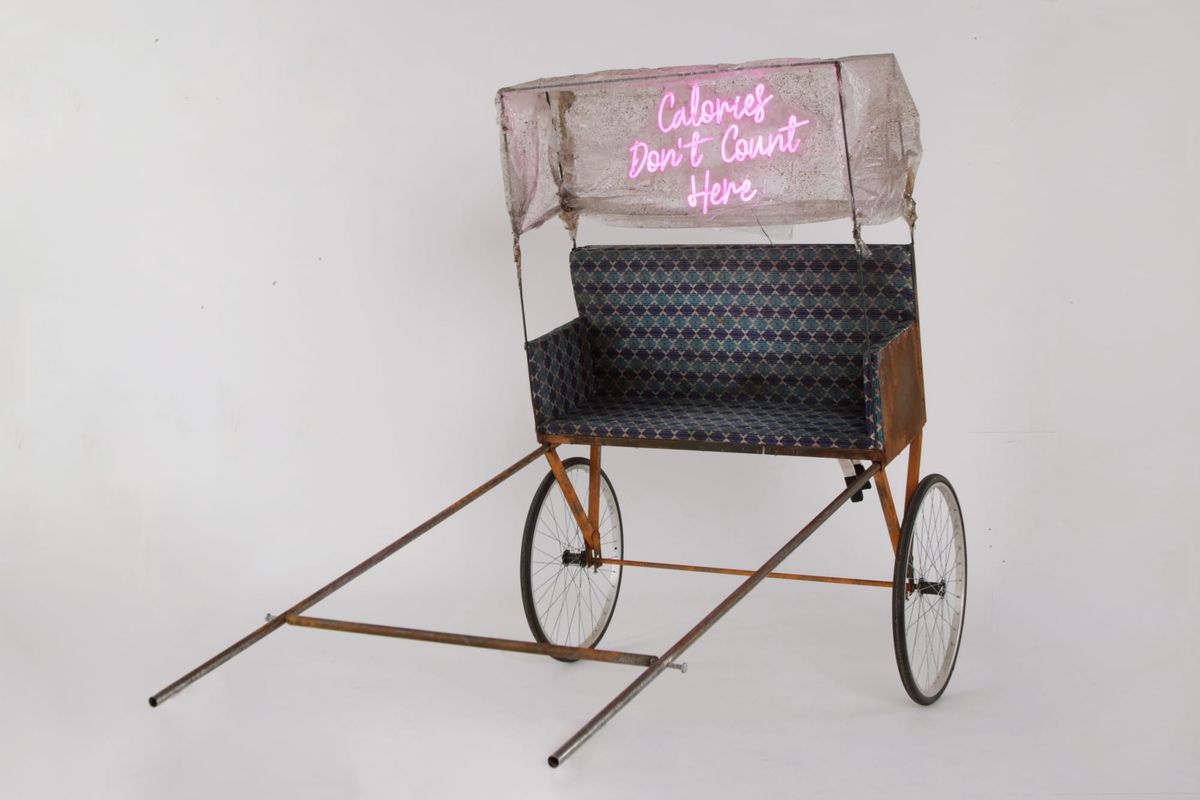
For TFL: Travel For Less, artist Luella Steed pulled a hand-built rickshaw through London, allowing strangers to ride in it. We spoke about labour, efficiency, and the politics of carrying and being carried.
TOMMY: What first drew you to the rickshaw as a subject? What interested you about an object designed to carry one body through the labour of another?
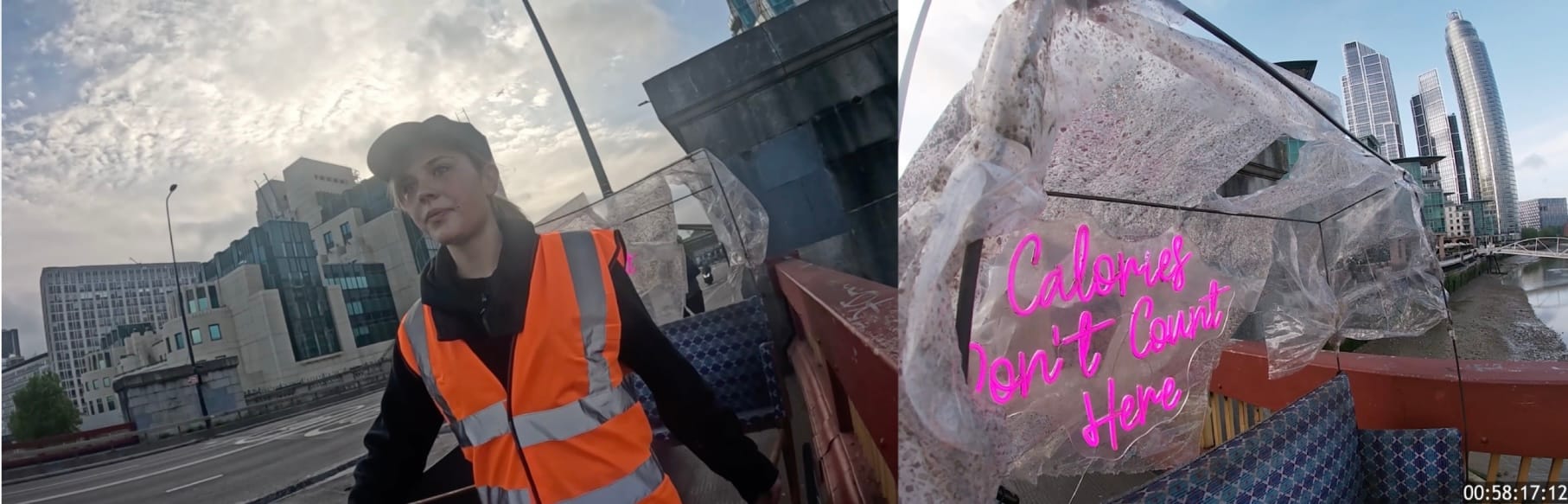
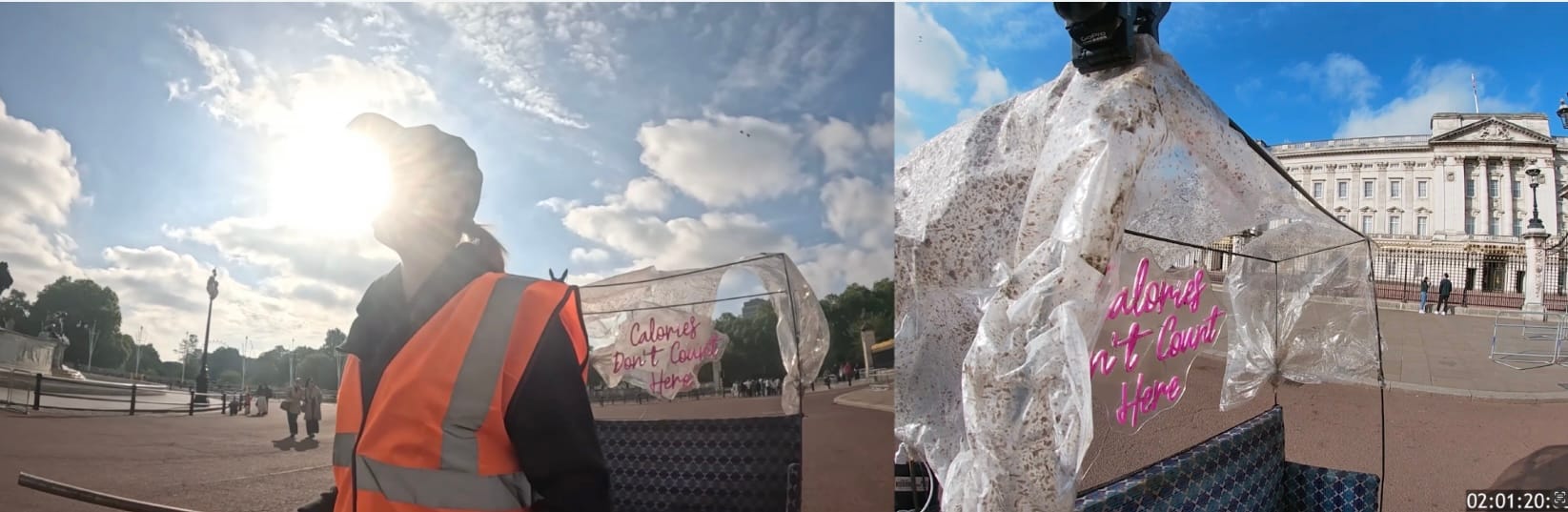
LUELLA: I was drawn to the rickshaw as a way that we perceive labour depending on whether we can see the physical body doing it. Every mode of transport, everything in our lives, is ultimately carried or activated by a human body somewhere along the line, but we've become detached from that fact. The rickshaw makes the physicality of it transparent again - impossible to look away from, whether you're the one watching from outside or the one being carried. I wanted to hold that experience up against the idea of modern efficiency. It isn't a provocation so much as a showing.
What attracted me to the rickshaw specifically was that activation and movement are built into it: the vehicle becomes a site of public landscape and social interaction.
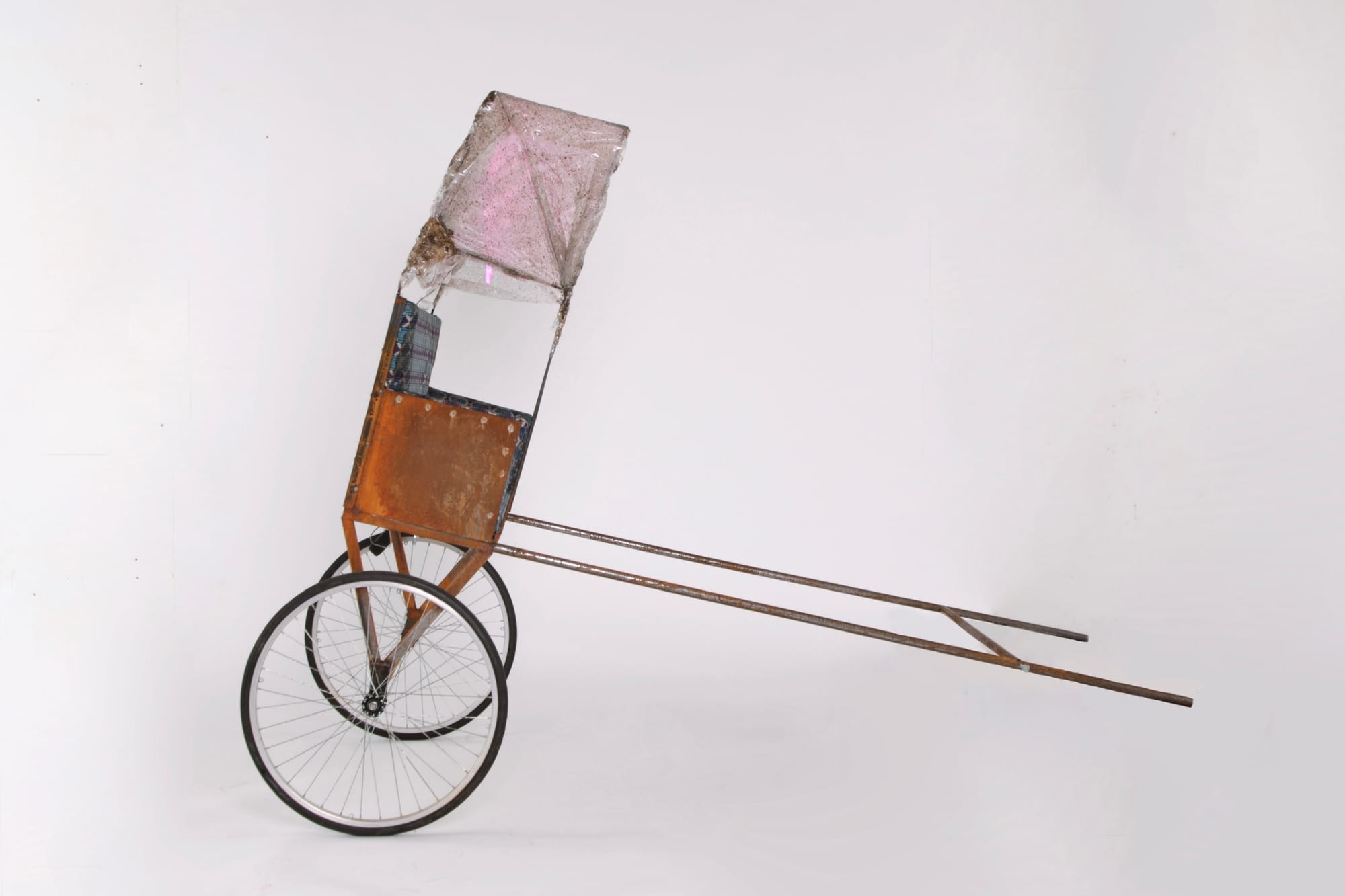
T: Why were wheelchair wheels important? And why the Victoria line seat covers?
L: The wheelchair wheels were practically essential - they gave the vehicle enough strength to bear weight and be pulled without failing. The Victoria line came from the route I'd planned to walk the piece along: it's the most efficient line on the Underground, and I wanted that speed and reliability to sit directly against the piece's long, durational labour - the contrast between the two speeds of "efficiency," one mechanised and the other under the control of human error.
T: The rickshaw tends to occupy a strange place between novelty and necessity. Were you interested in that tension?
L: Definitely. There's a real gap between this, even in luxury and convenience. The ways we choose to move through the world - efficiently, versus on foot, versus by bike. Think of the Underground: headphones in, senses on silent, a compression of time and space where you disappear into light–darkness–light and arrive having barely been anywhere at all. Walking a rickshaw through the same city sits in-between that gap. Tellingly, many people who spoke to me on the journey couldn't understand why I'd do something like this for art - many encouraging me to turn it into a way of making money, whether for charity or for my own work. It seems our culture is so interwoven with capitalist purpose that it starts to feel like a luxury just to be present within a journey, rather than to simply arrive.
T: Who is carrying whom (in this piece and, by extension, the cityscape)?
L: The physicality of the piece is actually quite equal. I built the rickshaw so that moving it isn't strenuous, either for me or for the vehicle itself. It's a physical act of labour, but a balanced one - all bodies hold each other in some kind of equilibrium. In that sense, the piece isn't really answering "who is carrying whom" - it's presenting an alternative to that question altogether. Yes, in one obvious reading, someone is doing the weight-bearing and someone is enjoying the ride. But it's not that black and white; it's more of a balancing act than a transaction. The piece is a showing of that: in physical form, that carrying and being carried aren't opposites but part of the same exchange. What we're rarely given is the language or structure to see it that way - the messaging around us defaults to a transactional, one-directional idea of who gives and who takes, so we lose sight of the balance underneath it.
T: Where did the phrase ‘Calories Don't Count Here’ come from? What kind of place is ‘here’ in this piece?
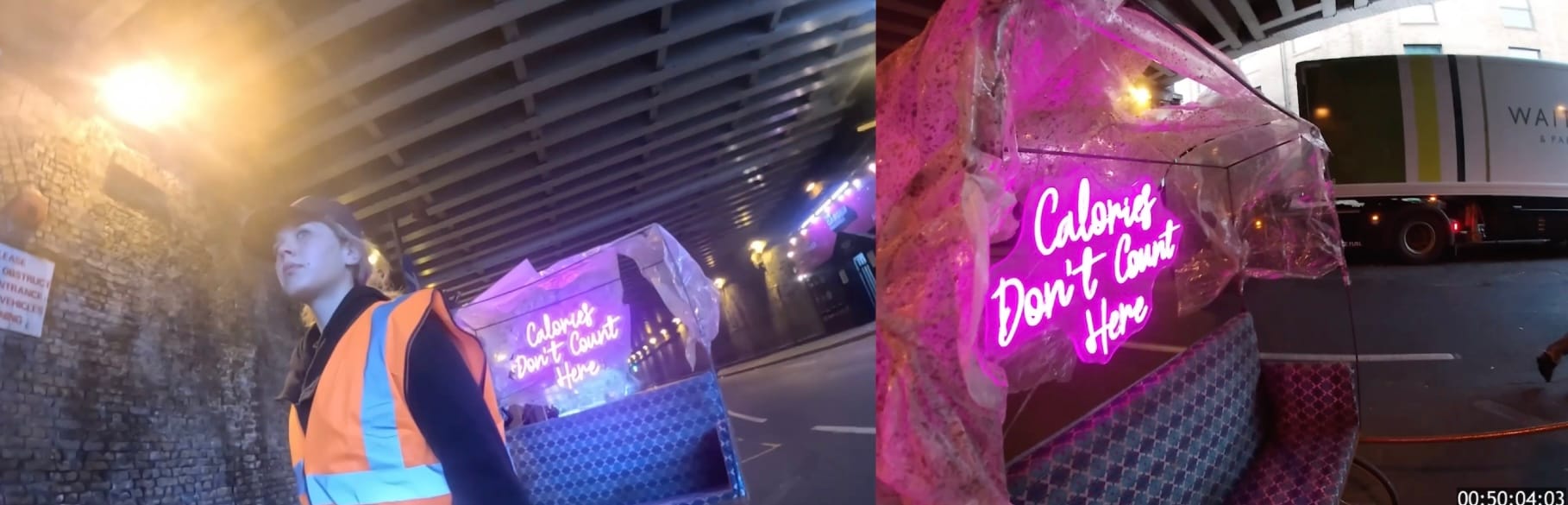
L: I saw the LED sign in a waffle shop window walking down Holloway Road, and it stopped me immediately. It felt like the perfect slogan. It summed up consumerist culture in one line: the desire to consume as much as you want, or more than you want, without ever facing a ‘consequence’. Sitting in a waffle shop, it points to a kind of gluttonous desire that's innate in us but is also capitalised on - through deprivation, whether financial or, in this case, caloric. Capitalist structure deprives us, and we deprive ourselves in turn. Our consumption becomes something we're always trying to do behind our own backs - blindly. The way we operate in the wider world and the way we operate internally feed into each other, and we get stuck in a loop of deprivation and guilty consumption.
Attached to the physical body, the sign activates differently - whose calories count, and whose don't? Whose bodies matter, and whose don't? Nothing is ever really free. "Here" is wherever the rickshaw exists, whoever it interacts with, and whatever it passes through in transit; the sign is reactivated by every landscape and encounter it traverses through.
T: Why was it important that people actually rode in the work?
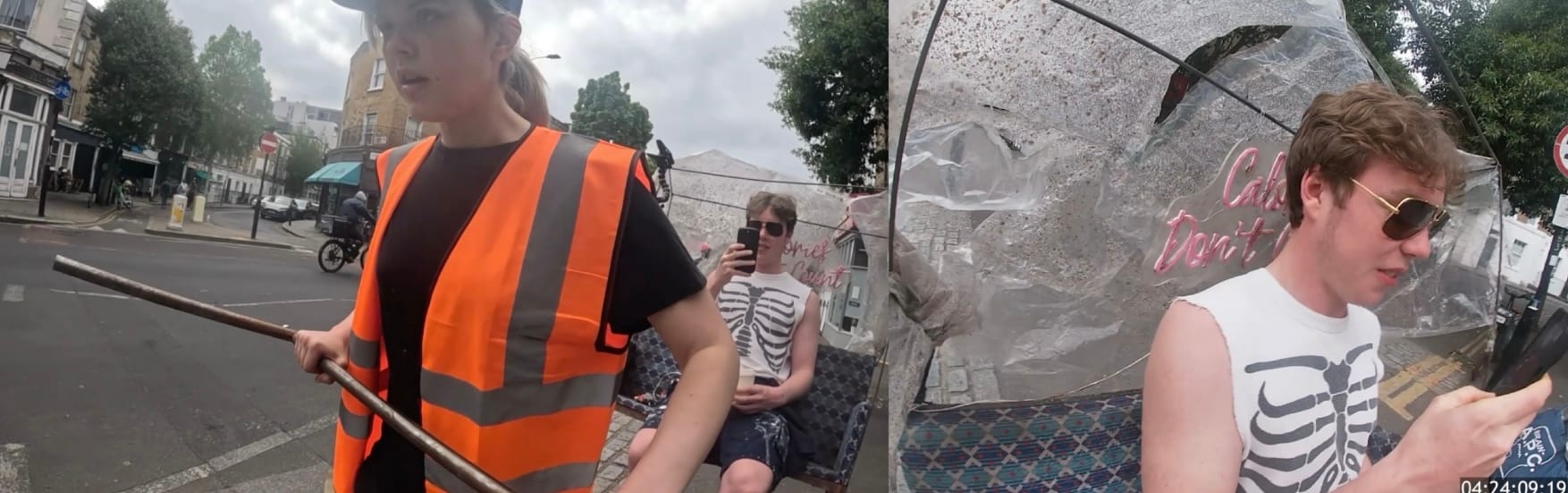
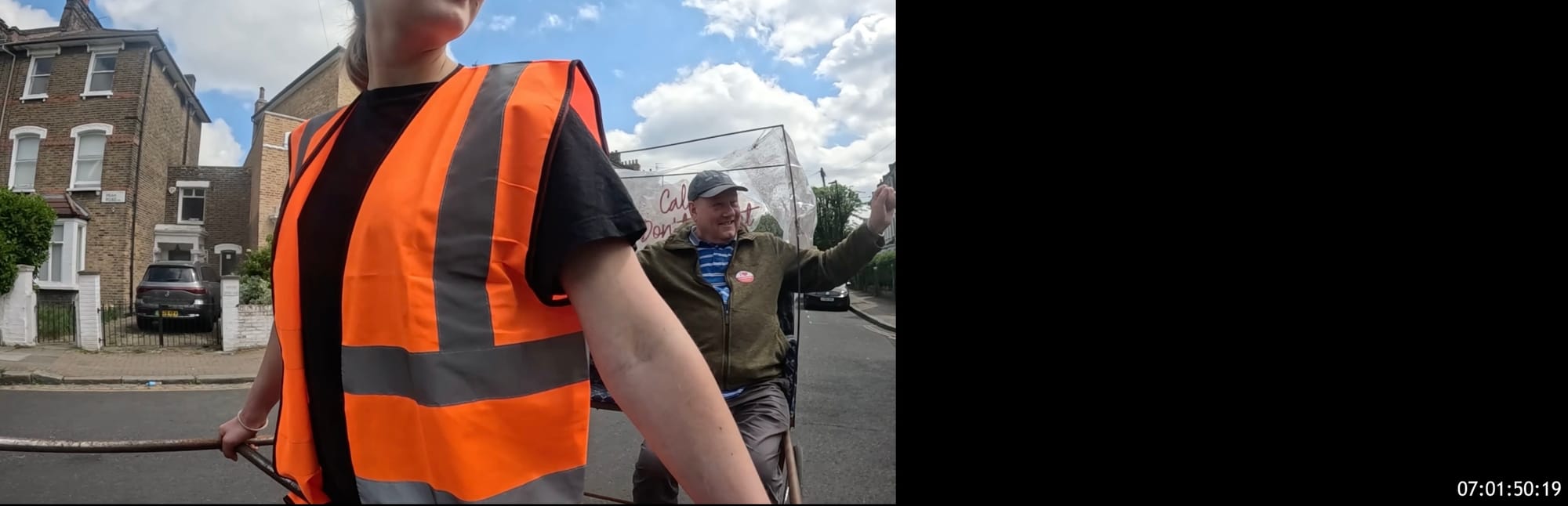
L: What mattered most was the journey itself - people wanting to sit in it was an added bonus. I never wanted to force participation, but I welcomed it whenever it happened. The action can read as both a disruption and an embedding within the public landscape, and which one it becomes depends entirely on how people react - disturbance or ignorance, inside the self-contained social order of London. On busier roads no one stopped to talk to me or wanted to sit in it; on quieter roads people felt safe enough to stop and have a conversation, which speaks to one of the work's central concerns: the depth and speed of time, and how that shapes our lives.
T: Did people behave differently once they sat in it?
L: Initially, people saw it as a joke and were taking selfies and really curious about what it was. After a while people seemed more observant of the world around them once they'd been sitting in it for a bit - there was a relaxed, observational quality that hadn't been there before.
T: I know you've had a busy few months making new work. Is there anything recent that you'd like to leave us with?
L: My recent graduate show work was a tricky one to navigate. I installed a piece titled ‘The Cover Up’, where I covered woodchip wallpaper inside the lift going up to the exhibition - something I wasn't authorised to do. It was taken down soon after, and I was threatened with a fine.
The act itself was a critique of the institution. It responded to another student's work being removed and destroyed - paintings which carried information about the University of the Arts London's financial ties to Lloyds Bank, which between 2018 and 2025 provided significant financing to arms companies with documented exports to conflict zones - was found torn into multiple pieces in a CSM skip. UAL holds assets of £735.6 million with the bank, and deliberately keep students uninformed. That wasn't an isolated incident: several other pieces were destroyed or covered up around the same time, all containing information about UAL's affiliations and how student loans were connected to funding the war and genocide in Palestine.
Woodchip is a familiar fix - cheap, textured, used to disguise damp, cracks, asbestos. It doesn't repair anything, just hides it from view. In the same way UAL covers up its own damage - destroying student work, silencing students, protecting its name - this work was one ugliness laid over another.
A lift is built for frictionless passage, somewhere you move through without pausing to look. Placing the work there turned that logic back on the institution. It wasn't authorised, and it didn't ask to be - that unauthorised presence was the method: revealing what an institution protects, what it punishes, and on what terms, by working outside the channels it controls. This work anticipated its own removal. Installation, discovery, erasure - each stage just continued the cycle, extending the cover-up it was exposing rather than closing it off.