'Crossing Out What the Last Person Said': In Conversation with Jesus Vazquez

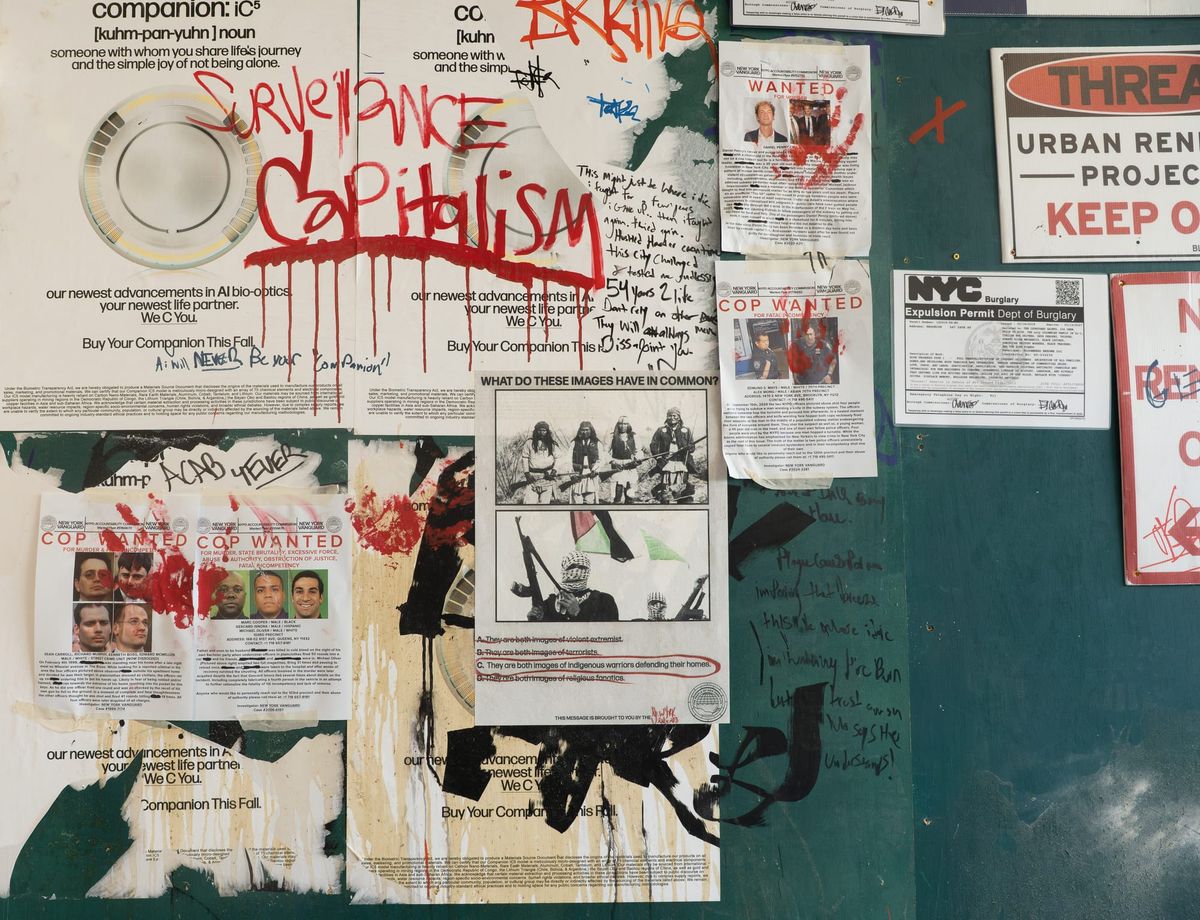
I met artist Jesus Vazquez at the Royal College of Art's 2026 Graduate Show and was immediately struck by his installation, Somewhere between 1979 and 2033 in South Brooklyn, at the edge of Sunset Park & Park Slope, all the Courtyard Saints found and lost their Block in one lifetime. The piece transformed a corner of the gallery into a fragment of New York's contested streets. Afterwards, we caught up to discuss unofficial histories, the politics of public space, and the ways personal memory becomes entangled with the stories cities tell about themselves.
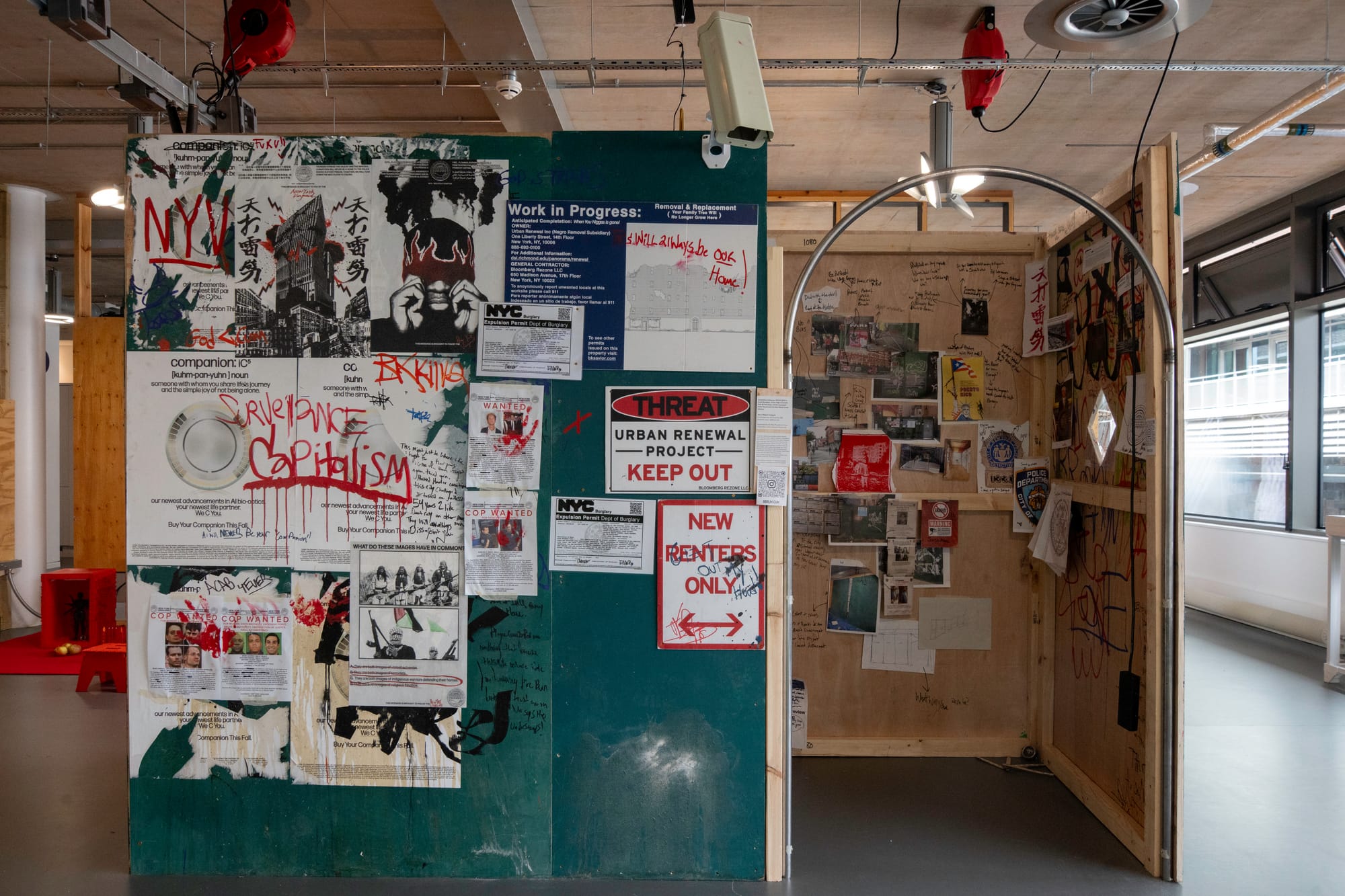
TOMMY: Your installation presents New York as a place where competing narratives are constantly pasted over one another (as you describe it “a stage - and often a battleground”). Could you tell us more about how the political atmosphere of NY has influenced the way you make work?
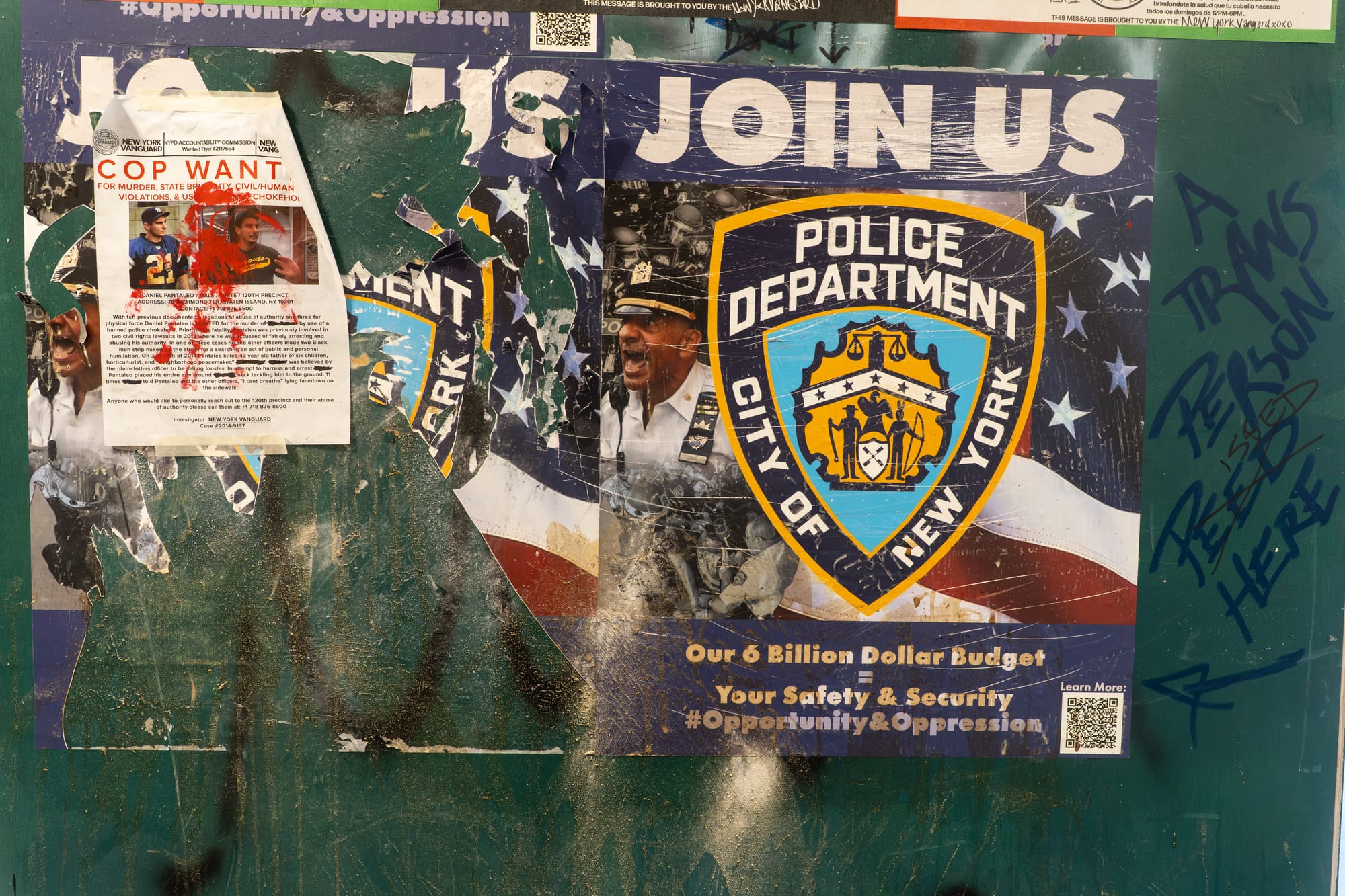
JESUS: For many reasons, New York City does a really good job of covertly normalizing its political extremes and it’s those “normalities” that I tend to gravitate towards exploring in my work. How normal is it that the National Guard patrols the subways with assault rifles? How normal is it that one out of five children lives in poverty in one of the richest cities in the world? How normal is it that the NYPD budget is 8 billion dollars and grows each year? It’s actually quite difficult to leave your home and not be challenged by the city’s many signs that it’s an
extremely tense political battleground. Where turf wars are disguised as deed thefts and colonization disguised by the bureaucratic language written on construction permits you find on scaffold walls. Because the nature of hustle in New York is so intense, it's by design that we get caught up in the insularity of our own struggle within a single household (or lack thereof), and we normalize the suffering and struggle of others. But I think that’s a standard that can be rewritten and one I’m interested in reimagining in some of this work here.
T: You describe political posters and public messages as a form of “noise”. What interests you about that noise?
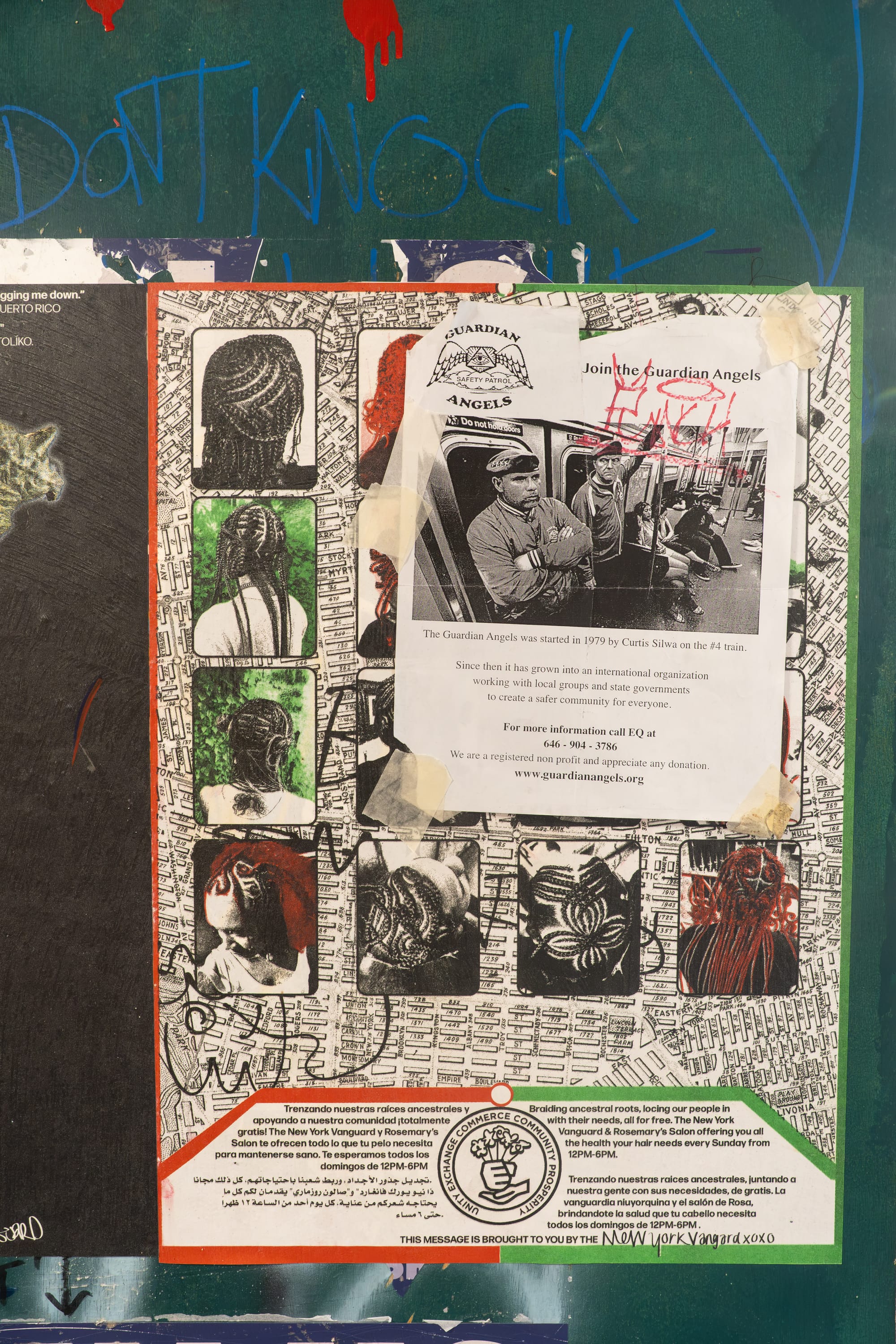
J: That quote was actually rewritten by the organization that worked with me. What I originally said was, “Where and how does every individual fit in this cacophony of voices and ideas?” New York certainly is noisy, both literally and figuratively, in all the advertised propagandizing you’d come across on any street. But I don’t wanna leave out New Yorkers contribution to that mixture of “noise.” Just as much as you’ll find the newest AI ad or poster board for a 3D model of a new Brooklyn high rise, you’ll find the public responding to it via handwritten messages. “We don’t need more of this,” or “AI is not your friend.” But even more interestingly, you’ll find people arguing with each other on the same wall over the course of a few days or weeks. Crossing out what the last person said, rewriting it, and ultimately putting out their own disagreement or agreement with their version of what they think New York is. What I find interesting about this, compared to any similar argument online, is that there’s a materiality to it. For example, in Williamsburg, I remember there was a quarter of an entire building wall covered with missing posters for “kidnapped” Israelis by Hamas. The next time I saw it, someone had ripped many of the posters down, and someone else had written on some. The next time I saw it, this person had put back all those posters that had been taken down. As a storyteller, I find this really important to retell.
T: Why a construction site specifically?
Like many global cities across the planet, New York’s seen a vast physical and cultural change due to gentrification and displacement. These construction sites (also called “sidewalk sheds”) are what will appear after a building has been demolished and before a new one is finally built. It’s a really fascinating liminal object signaling rapid displacement and change that is so common that people often don’t think of it much. Which in itself is a crucial reason to explore what these sites really are and how the public interacts with them as an artifact of those things. In a practical sense, too, it’s the perfect canvas for a series of works to be posted up onto for the sake of honoring this project's concept.
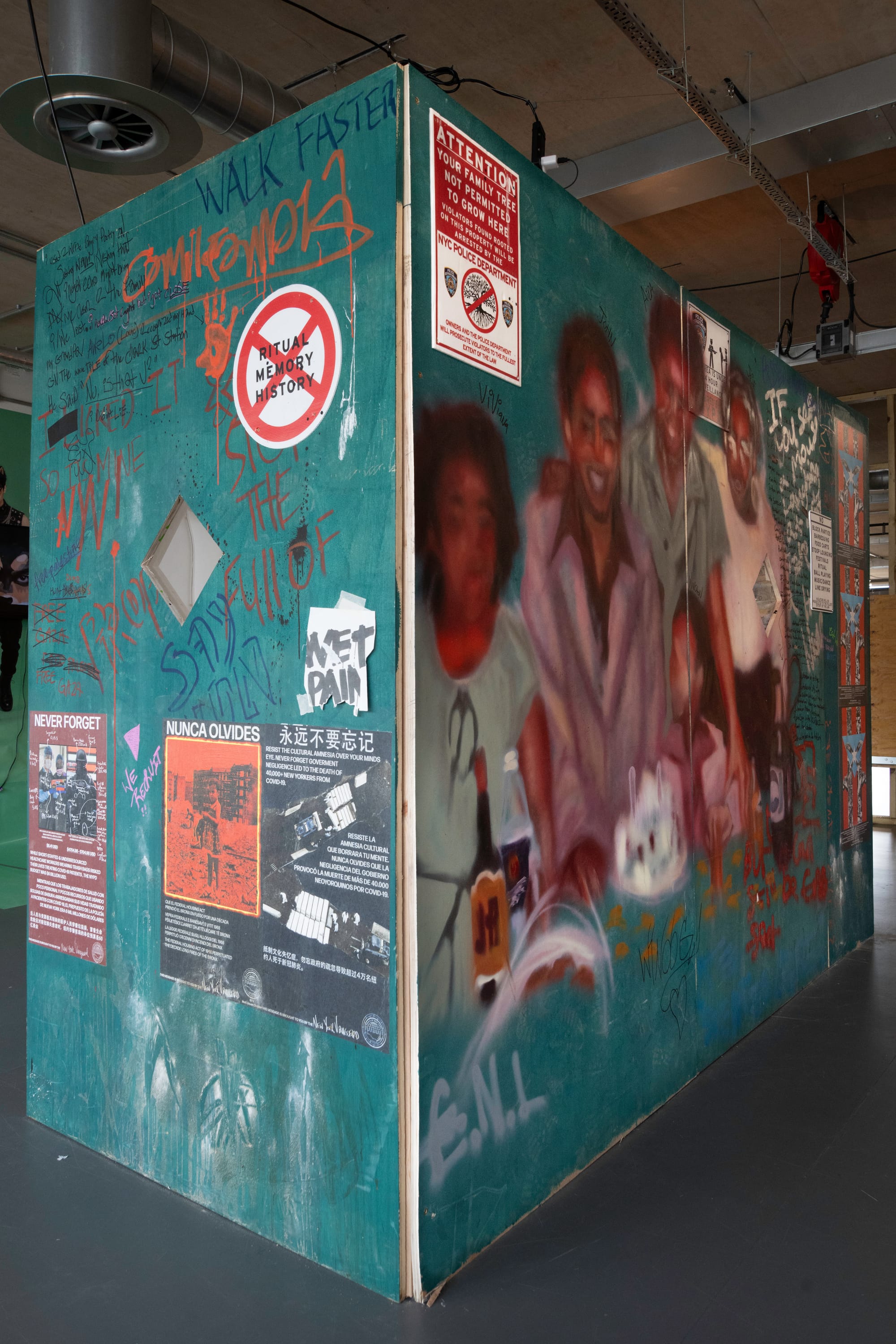
T: What can graffiti, flyposting and unofficial messages tell us that official histories often can’t?
J: The first thing that comes to mind is the importance of authorship. Official histories often omit and funnel historical context to engender ulterior narratives that can shift people’s identification and perception of history. Also, within the US, at least I’m pretty sure, most US history textbooks are written by a cooperate committee of historians and writers whose information needs to be state-approved. Graffiti, zine-making, flyposting, and many other avenues of creative countercultures are (almost) always authored by grassroots organizations, independent creators, or guerrilla artists. The narrative history of culture, of life, then becomes centered by a people dictating how they want their stories to be told and remembered. Which is something the state can never replicate.
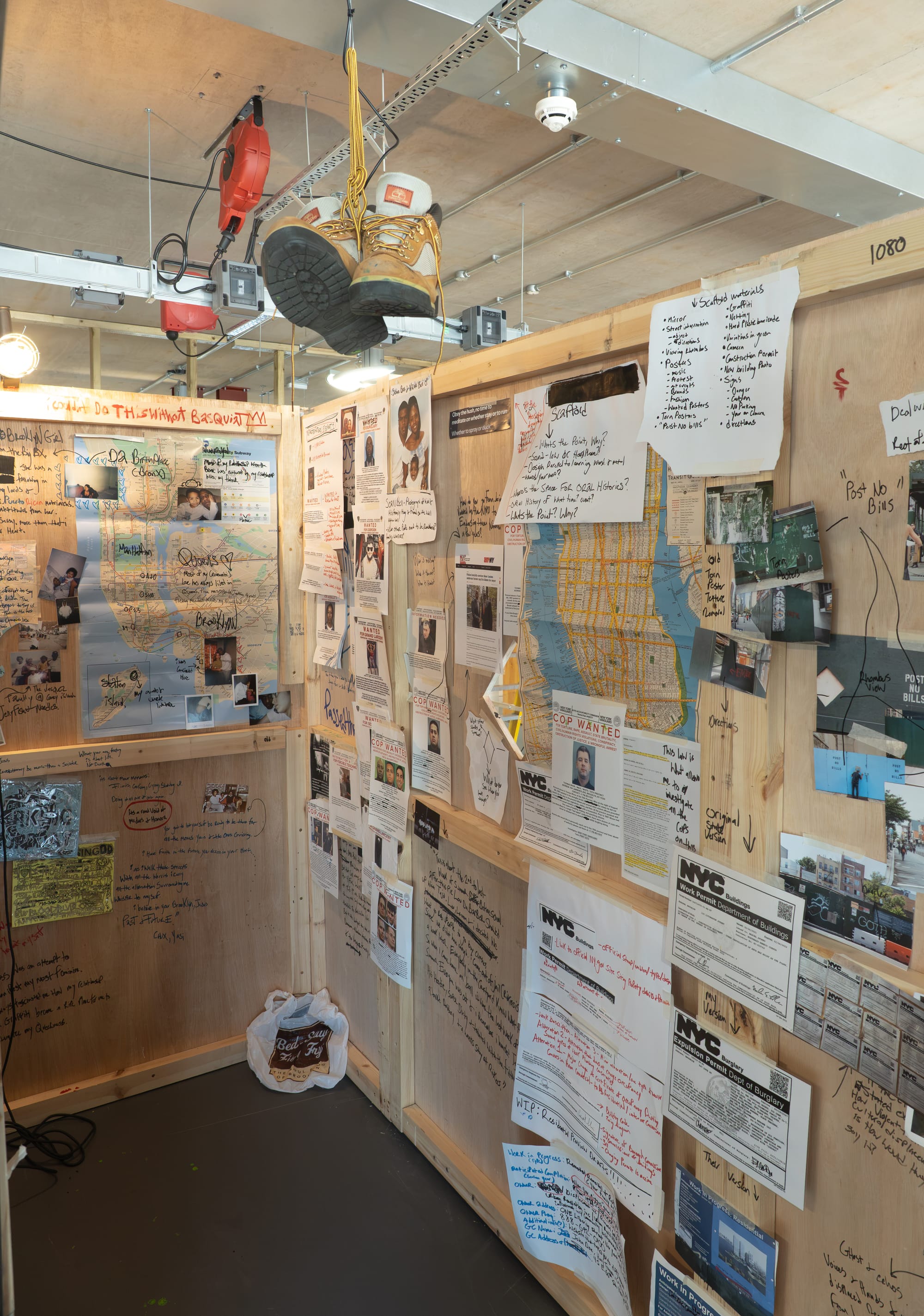
T: What responsibilities come with creating fictional public documents that resemble real ones?
J: When I was making this work, I often wondered about the ethical complications of inventing a world using the political turmoil of our own as its material. I never quite found an answer to a question as simple as, “Is it right or wrong?” But I certainly found ways to go about my speculative fiction that were intentional. Because with a project that implicates so many ongoing crises, generations of working class people, lives taken or harmed by police, etc, there is a lot to honor at once. And then outside of the fictitious element, there is the reality that this installation will then be shown to the public within an institution whose predominant audience will be a white middle-upper class. So there’s a lot going on and a lot to consider. Something that remained important to me throughout this entire process was to allow this to be messy. Do not present it in such a way that will spell its message out to people, or present the narrative of this fictional world by any linear methodologies. It needed to be conceptually authentic in that way to retain its ability to properly honor the reason this work began. Which is and always was to canonize the lives of New Yorkers who’ve fought to live here and commemorate the many ways New York chooses to express that fight through materiality.
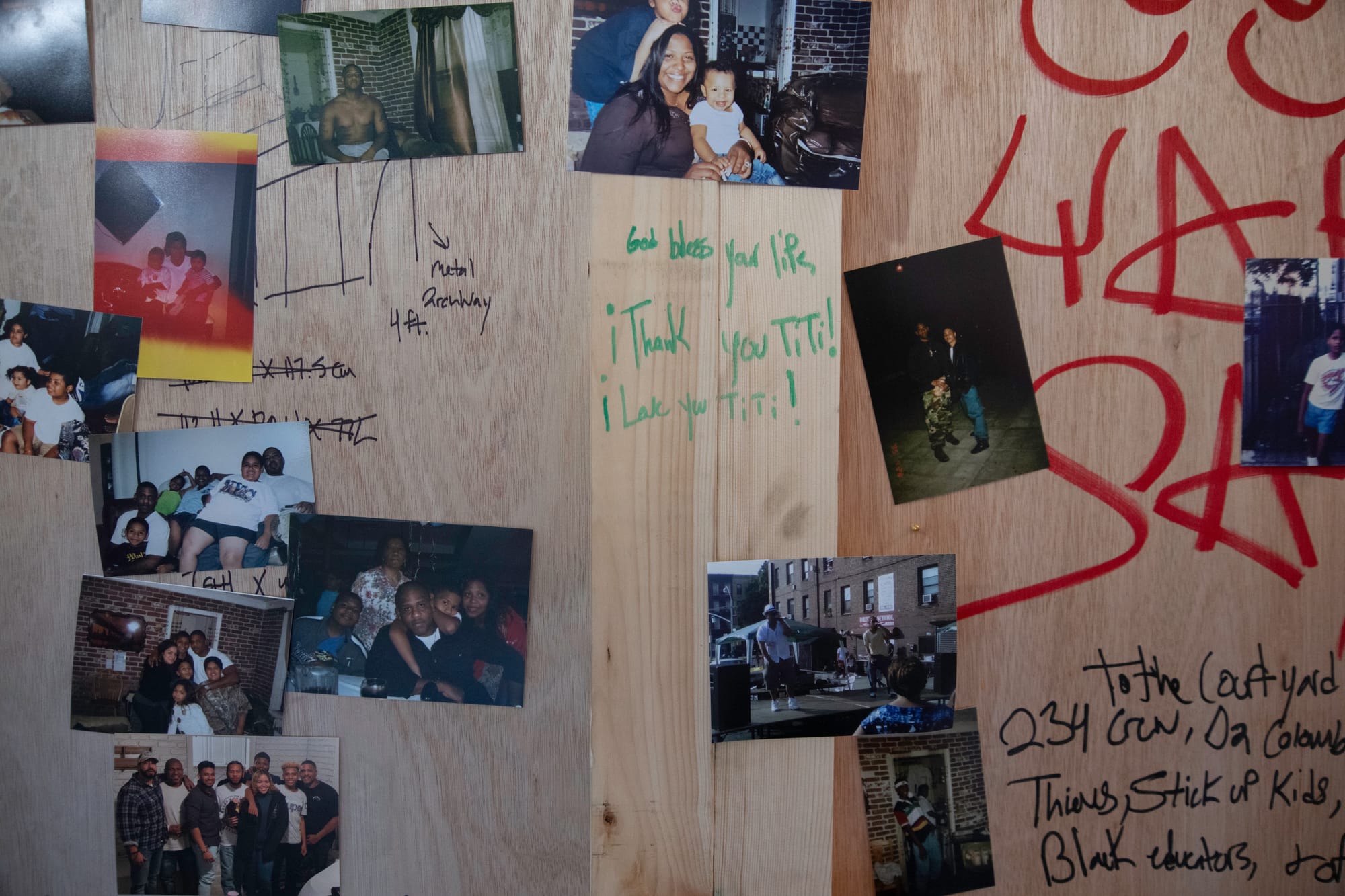
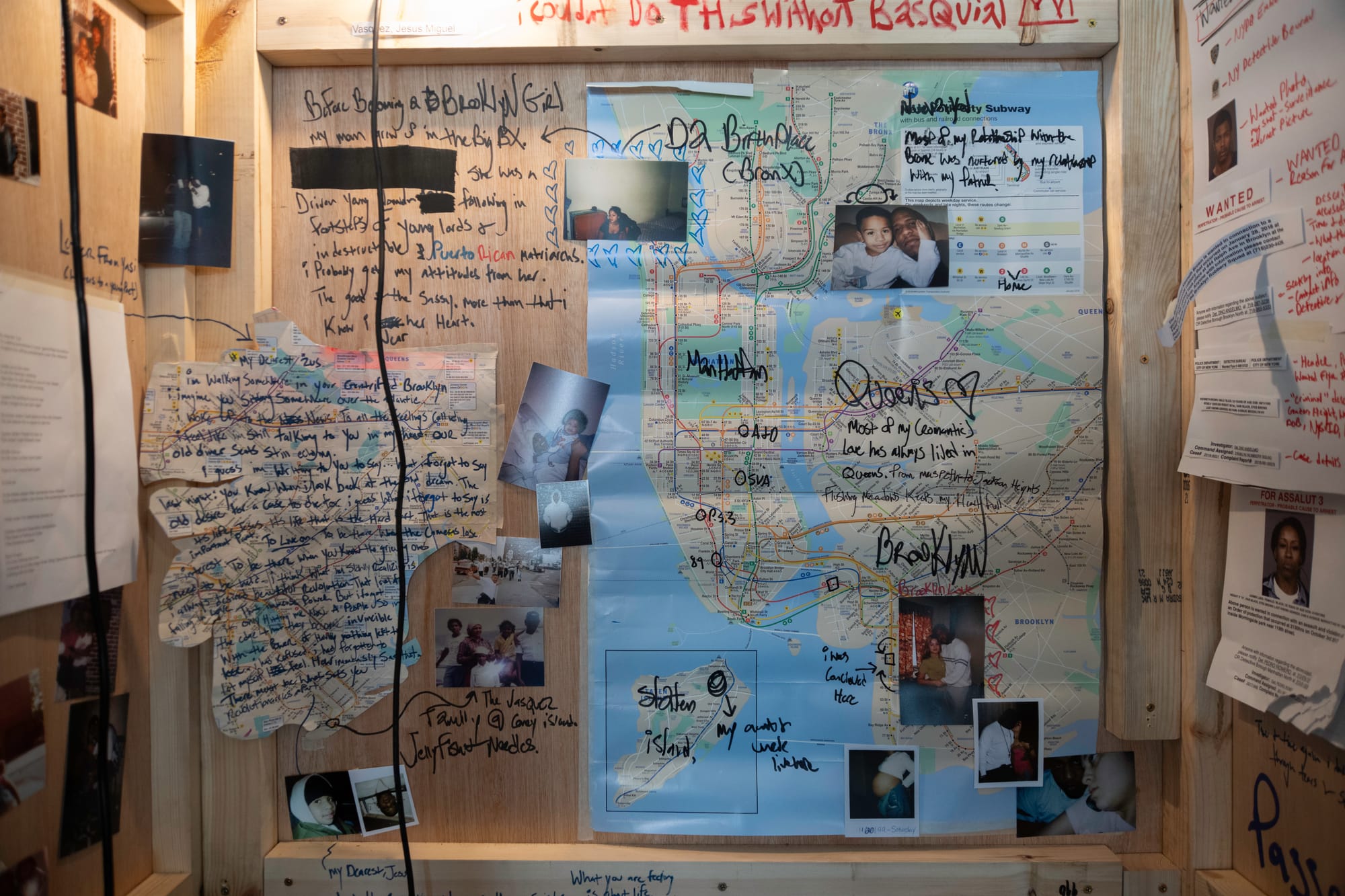
T: Family photographs included in the work occupy a contrasting emotional space from the warning signs and political posters. How does personal memory interact with public history in your work?
J: After losing some relatives during the COVID-19 pandemic in New York and participating in the 2020 protest, I really understood how what will one day be named “history” corresponds with my life personally. Even more, those two things are often quite intertwined. Sometimes it may be easy to conceive a certain degree of separation when engaging in public history, blurring the fact that real human lives are implicated in the consequences of history. With my installation, I’m trying to do away with that degree of separation and make saturated current event buzzwords like “gentrification” less of an abstract concept and more like an ongoing force shaping real people’s lives.
Jesus Vasquez is a Brooklyn-born, New York-based multimedia artist who earned a BFA in Photography and Video from the School of Visual Arts in 2021. Working across moving image, photography, installation, painting, and poetry, their practice explores ancestral desire, state resistance, and the ways public artifacts and spaces shape our understanding of history and identity.
Instagram: @bruh.cuh