Tommy Sissons: 'To the Youth Centres of Yesterday and Tomorrow'

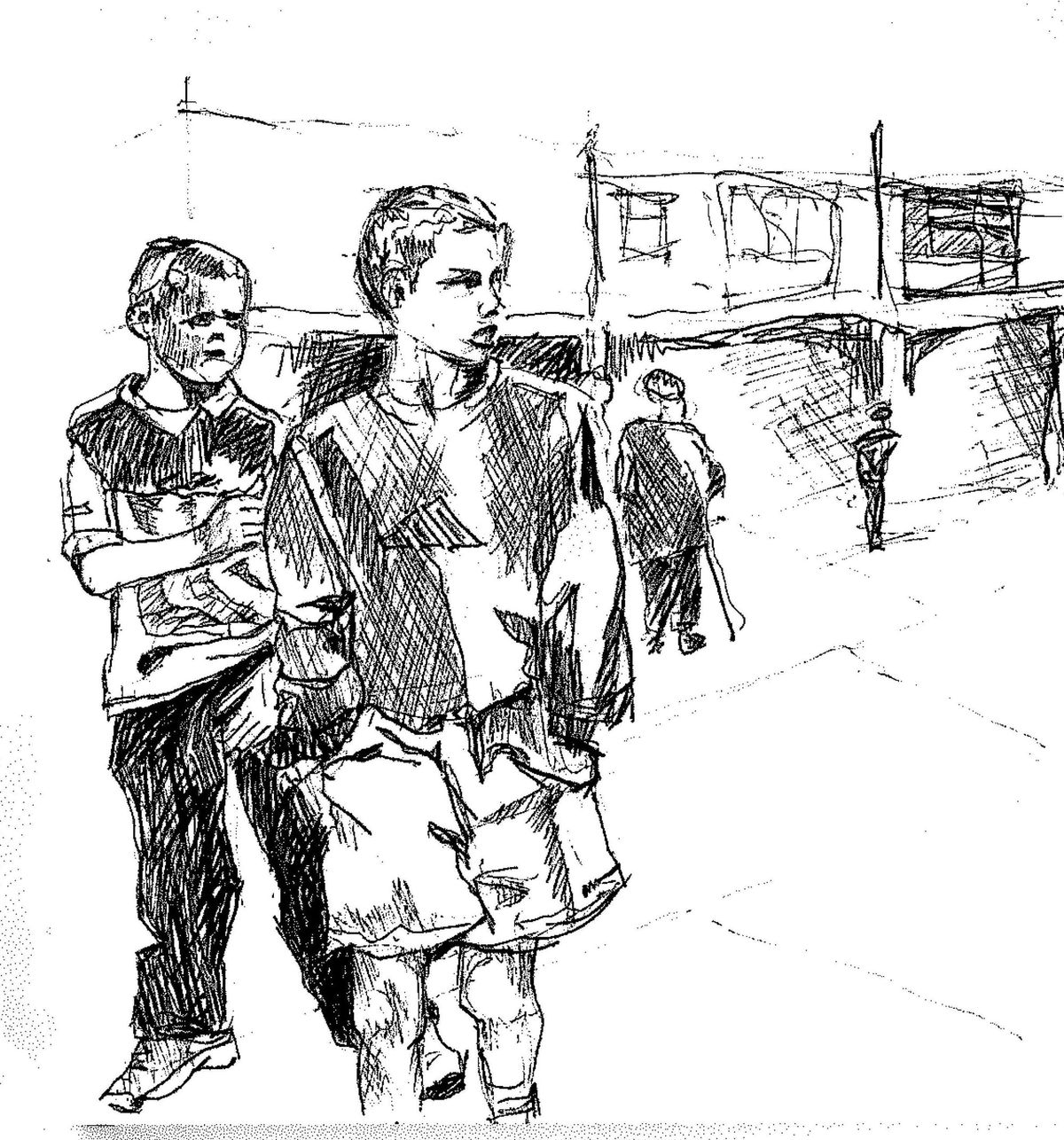
December 2009. On a Tuesday evening at the Crew Club, a youth centre on the Whitehawk estate in Brighton, a two-hour window to use the recording studio is divided into twenty-minute slots. It is snowing and as many as thirty teenagers have accumulated outside in tracksuits and puffer jackets, each vying for one of the six coveted recording slots that evening.
If you are lucky, you make it into the recording booth and load up a beat usually from a burned CD brought along by somebody’s cousin from London, containing a couple of dozen grime instrumentals. By the time you are ready to record, you probably have about ten minutes left to lay down your three verses. If you go over your slot by so much as a second, you can guarantee that the next teenager in the queue will kick open the lock on the studio door and run in to haul you out.
Looking back, these hastily recorded songs were the currency of our adolescence. They could make or break you in our social circles, and for some there was the genuine belief that this music would be a route to wealth and celebrity. On a psychological level, I believe the magnetism for most of us was the possibility the recording booth offered to establish ourselves, not only in the eyes of others but in our own minds also - to quite literally become our most fully realised selves.
There was no time for second takes. The bars you’d rehearsed all week were laid down in one go, and the MP3 sent from Bluetooth to Bluetooth: often unfinished, always unmixed and imperfect, sometimes inaudible. And that recording represented you in your friendship group and the wider community typically for several years. If you were half decent, you could be lionised overnight. Many bad tunes were recorded (and occasionally a good one) but what mattered was that the Crew Club functioned as a place where working-class adolescents could dream up a version of themselves and take steps towards actually becoming that person, even if they eventually decided that the activity they were trying out (music, in this instance) wasn’t for them.
Between the ages of thirteen and fifteen, I was at the Crew Club almost every Tuesday night. Founded by local parents Lorraine (always known as Loz) and Darren Snow in 1999, following the fatal stabbing of teenager Jay Kensitt, the Crew Club is a low-slung, purpose-built centre with sweeping curved walls. It sits at the foot of a steep chalk valley down which teenagers used to recklessly fling themselves on their mopeds for the thrill of it. Loz, the matriarch of the Club, who knew the countless kids who attended like the back of her hand, was well-deserving of the MBE she received for her dedication to local youth.
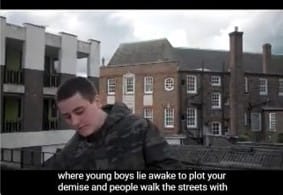
When I got a bit older, around sixteen, a few of us migrated to the Pelham Foyer near the city centre, where we could get a recording session closer to two hours. Somehow, every week, we would find something to fill it with. Some of my earliest spoken-word poems were filmed there on a hand-me-down camcorder – the videos were low quality but the audio was clear, which was good enough for me at the time. The Foyer housed - and still houses - young people experiencing homelessness. Even after we stopped recording there, I would return regularly to spend time with friends who were living in its rooms, until we were around twenty-one.

Then there was Brighton Youth Centre, which gave me countless opportunities to act, to develop my writing and take part in poetry slams and, when I was a bit older, to become a mentor to younger writers. I credit that space as being fundamental to the earliest stages of my career. When my first poetry collection, Goodnight Son, was published in 2016, I launched it at BYC and packed out the main hall. I still consider it one of my favourite gigs.

Even without structured activities on offer, other organisations like the Salvation Army provided a room for a couple of hours after school when we were particularly young. They gave us free ice poles and hot chocolate, let us play on the Xbox and even once showed us how to bake. I have a particularly fond memory of being one of a group of rowdy thirteen-year-old working-class boys mouthing off at one another for not putting the right amount of butter into the mix to make the perfect cupcakes. Spaces like this were invaluable too, and we appreciated them, even if we did graffiti their toilets. We benefited simply from having somewhere to be.
Villages and Castles
Youth centres are a lot like villages. They are miniature social ecosystems with their own customs and routines, which operate on shared responsibility and an economy of generosity.
There was a keen sense of communal history in the youth centres I attended, and because of that we felt invested in its continuity. Many of the youth workers had been there long enough to know our older siblings or had attended the same youth centre themselves when they were teenagers. For this reason, we were never anonymous. Everybody knew everybody or at least knew somebody who knew somebody. News travelled quickly through the village, and of course there were conflicts as is bound to happen when you put so many working-class kids, many of whom had difficult home lives and some of whom had no homes at all, in the same place. But we learnt to forgive one another, resolve any issues we had, and cultivate healthier relationships as a result. Compassion and understanding were among the many things we learnt to practise in our village, skills to be developed through the business of living alongside one another. Our occasional absence was always noticed.
There was an each-one-teach-one attitude, and something about the space made you want to muck in and help. There was no money involved (everywhere had minimal funding) but the youth centre offered a practical lesson in collectivity that is rare to find in many other public spaces. Unlike our schools, the youth centre was ours. We actively sought out responsibility for it. The youth workers, who might have sworn and smoked around us (so were, in other words, human) were essentially like older friends: informal mentors without a 'school-teachery' impulse towards discipline and punishment. And so, we wanted to learn from them, although this isn’t to say we weren’t ever challenged.
I remember getting a sharp talking-to on manners alongside two other boys for not offering to make a cup of tea for a visitor who had come to record with us. I remember another friend smoking spliffs inside and being turfed out, although, of course, he was allowed back the following week, and the slate was wiped clean. The youth workers were educators, but they were also role models. They helped us realise better versions of ourselves.
In a sense, the youth centres I attended were also like castles. There were places of refuge certainly, but also – in the same way castles afforded their inhabitants a view beyond the immediate boundaries of their settlements – the free access to culture that youth centres provided allowed working-class kids to look beyond their material circumstances and imagine different futures. We could experiment with new identities, discover interests and abilities without knowing where they might lead, and be taken seriously before we had achieved anything. Namely, youth centres gave us room to dream. Particularly now, as articles regularly draw attention to the dwindling representation of the working class in the arts, the castle-like role of youth centres as defensive structures seems all the more significant: they protected working-class children’s right to participate in cultural life.
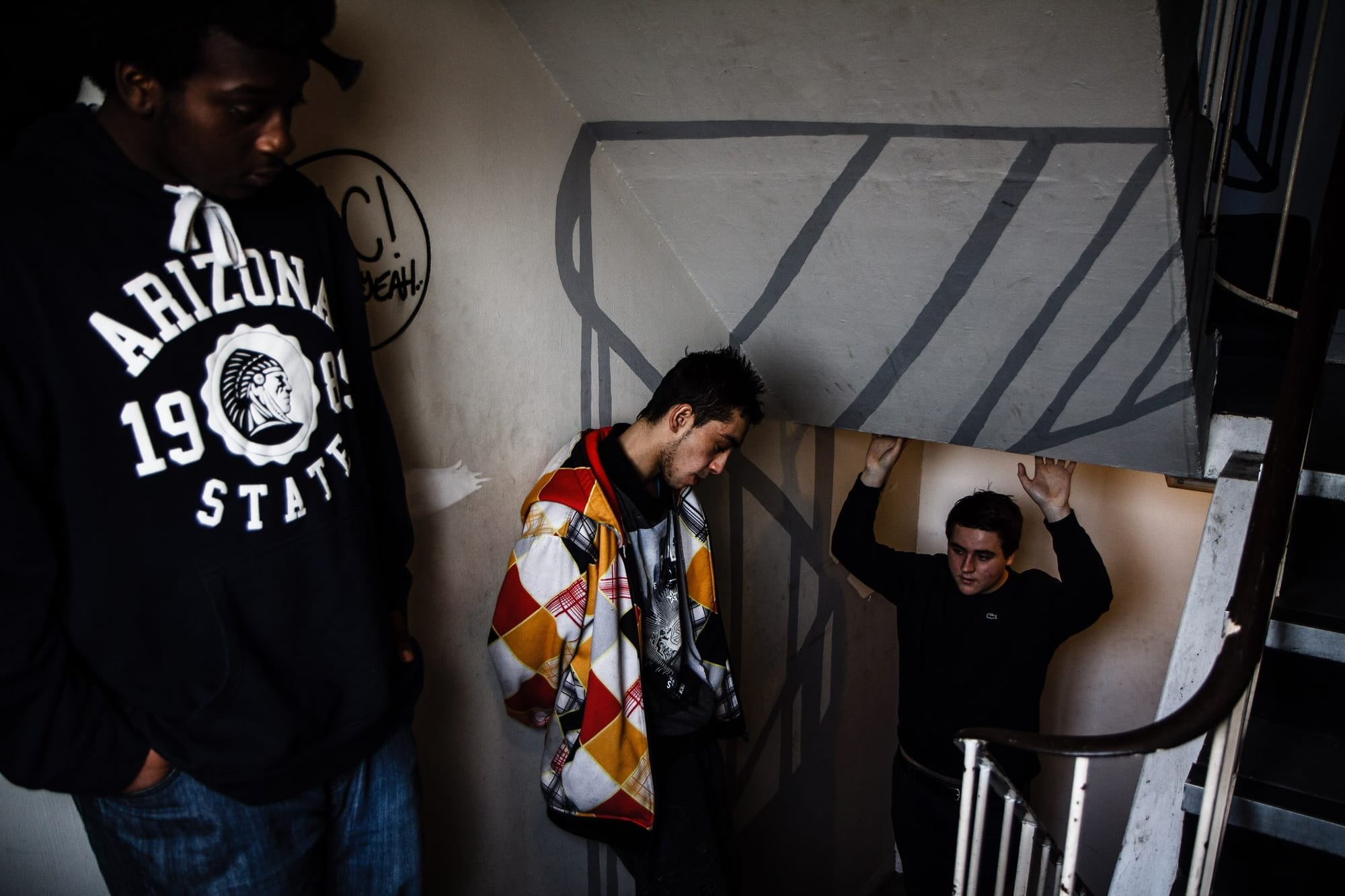
The value of these spaces is not simply anecdotal. The Youth Endowment Fund’s evidence review of youth clubs estimates a 6% improvement in school engagement and a 15% improvement in community connectedness. Its research also identifies particularly negative consequences of youth club closures for children eligible for Free School Meals, including increased school absence and lower educational attainment. These findings demonstrate that youth centres not only contribute to healthier adolescence for those young people who need support the most but also play a vital role in fostering a more cohesive society.
These castles for working-class youth offered elevated vantage points from which children could better see their world. They helped cultivate young people’s sense of integrity and self-worth. Whilst they felt like fortresses when I was a teenager, like any castle they are liable to attack and for more than a decade we have witnessed the dismantling of hundreds of youth centres nationwide. It is our job to defend them.
The Disappearing Village
The financial withdrawal from youth services in England has been catastrophic. According to YMCA England & Wales, local-authority funding for youth services fell by 76% in real terms between 2010/11 and 2024/25. The annual reduction amounted to approximately £1.3 billion, leaving local authorities spending around £419 million in 2024/25.
This decline is also visible in the number of physical spaces available. YMCA research cited in a parliamentary answer recorded a fall in local-authority-run youth centres in England from 860 in 2011/12 to 379 in 2024/25 - 481 fewer centres.
So where do adolescents go when the village disappears?
When I was a teenager, the expectation was that without youth centres we would be roaming the streets, getting into trouble with the police. It was a sweeping generalisation of course, but there was some truth to it in certain cases. I’ve known several so-called ‘hard-to-reach’ young men who have been murdered. Youth clubs wouldn’t necessarily have prevented those particular tragedies, but they do invaluable work in supporting vulnerable young people and providing routes out of the material circumstances that can draw them into violence.
In 2026, the question of where young people might go without youth centres is more complicated. Rather than retreating to a ‘dangerous outside’, they may be more likely than ever before to retreat into a ‘dangerous inside’: an excessively interior existence in which their social lives and sense of self are increasingly mediated through the online world. And since social media typically exploits the emotional responses provoked by negative content in order to keep users engaged, young people’s inner lives are increasingly at risk of being pervaded by pessimism, anxiety and a sense of powerlessness.
The loss of youth centres therefore represents a crisis in mental health. Their disappearance means fewer spaces in which interpersonal relationships can develop, compassion for oneself and others can be cultivated, and young people with messy understandings of the world (whether owing to childhood adversity or simply the fact of being young and imperfect) can seek community and support.
The government’s Youth Matters: State of the Nation report found that one in five young people aged thirteen to seventeen in England and Wales did not have a trusted adult outside their family. It’s difficult not to think about the youth workers who fulfilled this role in our lives when I was growing up.
I have worked on a freelance basis in youth work and have spent six years working part-time as a secondary-school and sixth-form teacher. I don’t expect a school environment to replicate that of a youth centre, but I can honestly say that some of my best pedagogical practice has come from adopting the approach of a youth worker rather than a ‘Teacher’ (an approach I am naturally drawn towards anyway).
Buying the kids with no books at home their first books. Writing and performing a poem over a beat made by a student who had come across my work online. Rejoicing in the artistic talent of the child who draws on the table rather than automatically rushing to punish them. Treating young people with humour, goodwill and understanding rather than sacrificing genuine human rapport in the name of impersonal ‘professionalism’.
Of the youth centres I’ve mentioned, I am glad to say that all remain active. In fact, the Brighton Youth Centre re-opened last year after a major redevelopment which partially demolished the old building and extended the centre to include dedicated rooms for counselling, digital media, and GP drop-ins.
It is easy to romanticise these spaces when looking back on them (particularly when so many have been closed or left without the resources to provide the activities they once did) but it is important to resist letting youth centres become objects of nostalgia. We should be building hundreds more of them. Their importance is immediate.
What we owe the next generation is straightforward:
- Youth centres should not be regarded as luxuries.
- Access to culture should not depend on parental income.
- Young people need properly funded buildings, activities and qualified youth workers.
- Provision needs to be consistent, accessible and informed by the needs and wants of young people themselves.
These are not extravagant demands. They are the basic conditions under which young people can be given the freedom, encouragement and opportunity to discover what they might become.
It is worth remembering what it feels like to be young and to have the world suddenly open up in front of you. Looking back at my teenage self, queuing at the Crew Club for my twenty-minute recording slot, most likely dressed in a McKenzie hoodie, Primark joggers and Reeboks with the soles coming off, I think about how we never took our eyes off the studio door as we awaited the end of the previous person’s turn. It was as if we had the entire world in our sights; like a universe of potentialities was contained in that 3x3 metre room. And as the door opened and we ran inside, it felt like we were running into an unfathomable and exhilarating futurity, running to become those ideal versions of ourselves who we had spent our days and nights imagining, running, and at last being able to say: ‘yes, I exist; yes, I can be!’
Tommy Sissons is a poet, novelist and playwright based in London. He is the Editor of GRASS Magazine.