Brandon McGrane: 'BangBang: You're Priced Out'

"Couldn't pick out two faces if you asked me ... might as well be standing in Fox Rock." Mick says this standing over his half-drunk Beamish, looking across to where his home used to be, a stretch of construction sites and demolished flats now fenced off and waiting for something cleaner and more expensive to replace it. It's a fitting look into a story about what Dublin has decided to keep, and what it's decided to sell off.
The Irish state has facilitated this. Decades of tax incentives designed to lure
multinational corporations to Dublin have succeeded on their narrow terms, GDP
figures that the government still points to with pride, while doing very little to prepare the city's housing stock for the tech workers and international staff that success was bound to bring. At the same time, Irish universities have spent the same period aggressively expanding international and American student intakes, who pay multiples of what EU students pay in fees, and treating that revenue as a substitute for state funding. The result is a housing market where purpose-built student accommodation and build-to-rent developments for incoming multinational staff are the only kind of large-scale housing anyone can reliably get planning permission and financing for, while social and genuinely affordable housing construction has been allowed to stall for a generation. What were once working-class flats estates have now been replaced with student accommodation and build to rent properties, mostly occupied by American and international temporary workers that will never have to live with the consequences.
.
This has led to an identity problem for much of the middle-class youth, and the housing crisis is central to this. It has delayed or outright denied the traditional markers of adulthood - home ownership, stability, independence. Many young people have done everything they were told, go to school, do the Leaving Cert, finish university, and get a job. Yet that stable pathway that education has given past generations, is becoming harder and harder for young Irish people to attain. And when material progress stalls, identity often fills the gap.
One of the clearest expressions of this is the romanticisation of working-class areas
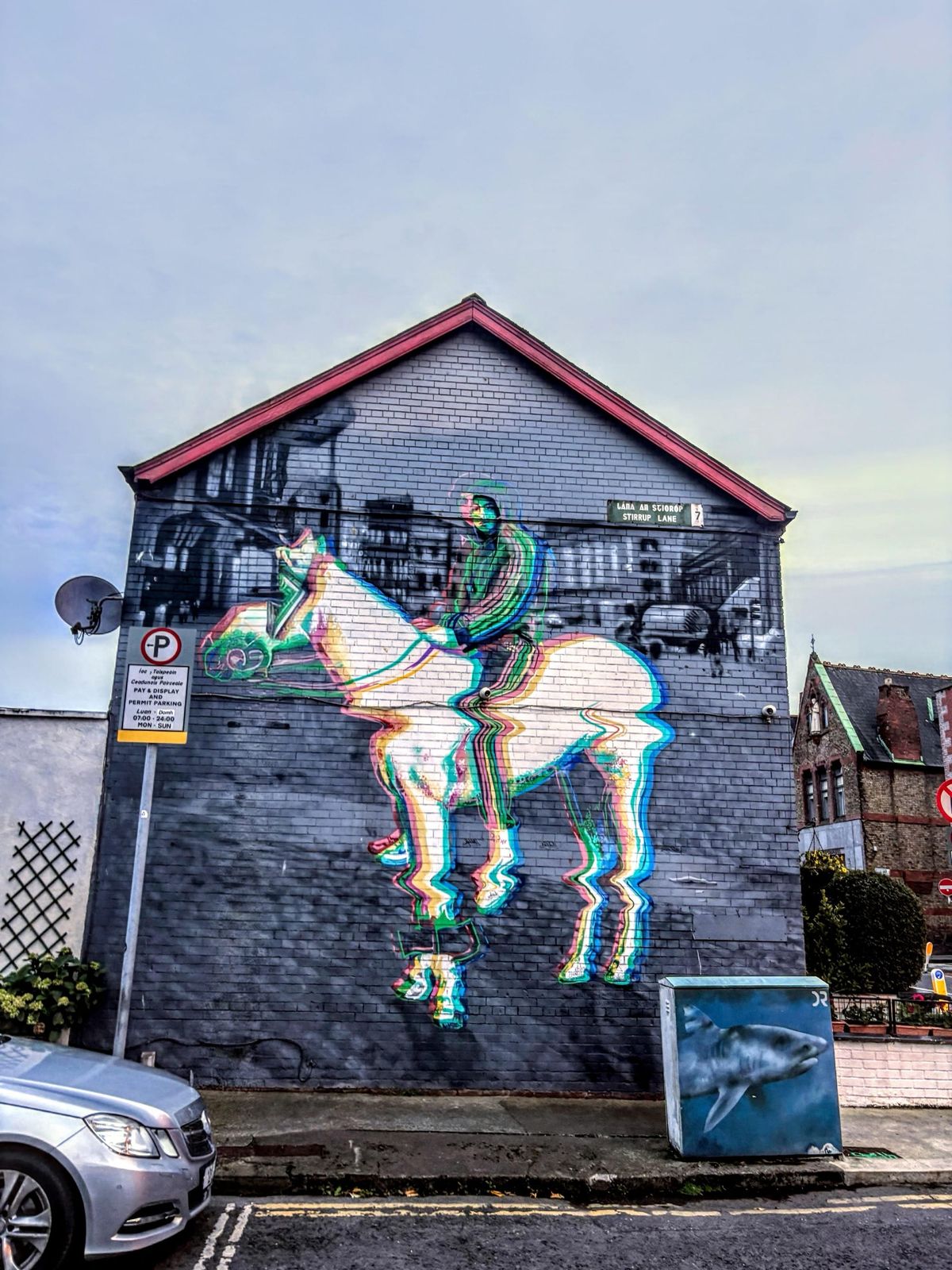
and culture. Walk down Manor Street or Phibsboro and you can see it play out in real time. BangBang murals go up, coffee prices inflate, and the rents continue to rise, the transformation is not just physical - it has become cultural.
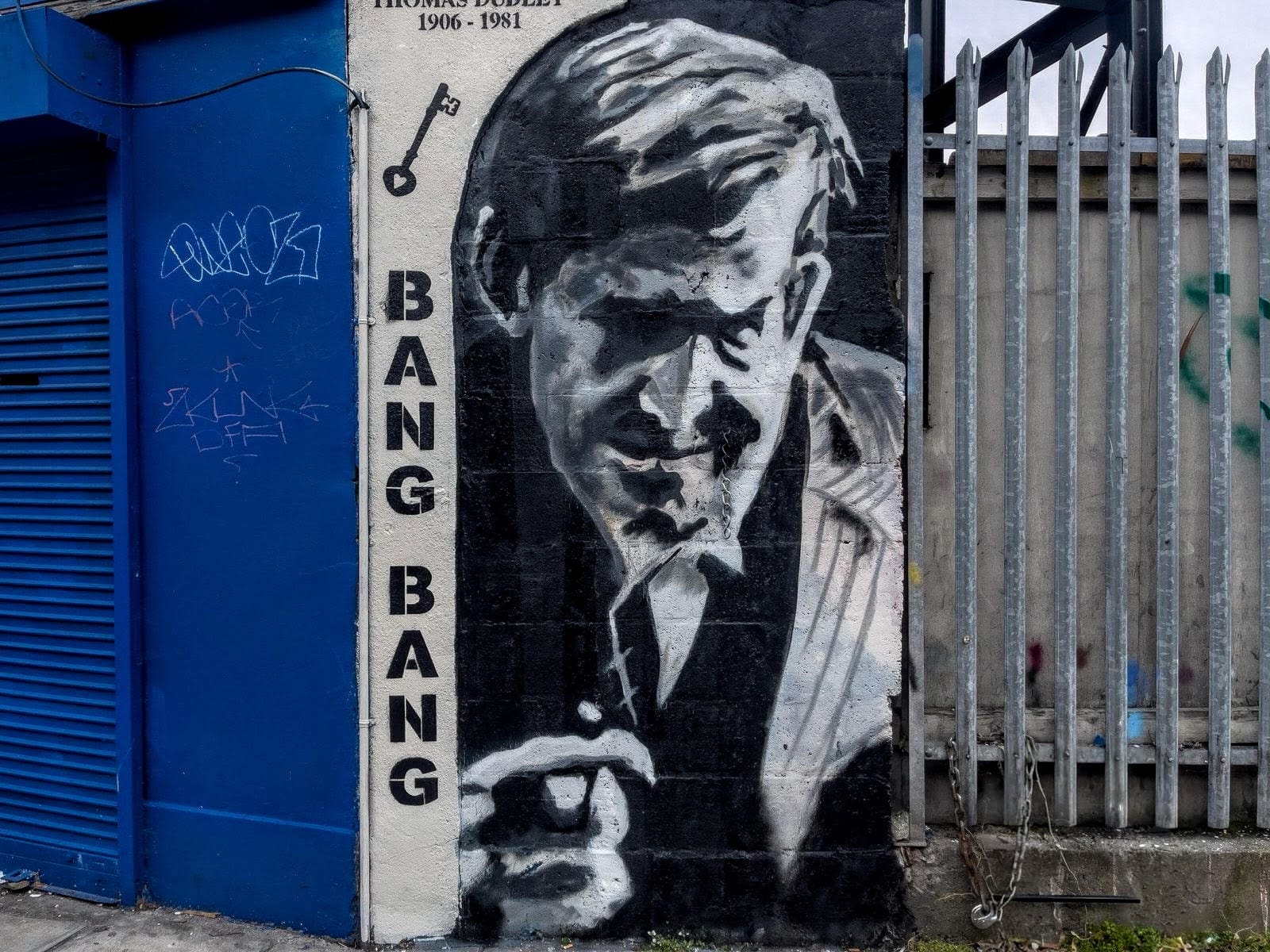
What were once working-class areas, populated with people with inner-city accents, have now been rebranded and colonised by people who have no connection to the area and more frequently, people who think Dublin and Ireland is some leprechaun and Guinness themed amusement park full of Paul Mescal lookalikes.
But for those who actually come from these working-class communities, the shift feels less like appreciation and more like erasure.
"I grew up in O'Devaney before they knocked it down. A mad place but it was alright to be honest" says Mick as we chat in a local pub around from the demolished flats.
"Now I walk through the same area, and it feels like a different country. If you asked people where Manor Street was, they'd look at you like you had ten heads for jaysus sake. It's Stoneybatter, or Stoney for the more unbearable raspy voiced Yanks and southsiders."
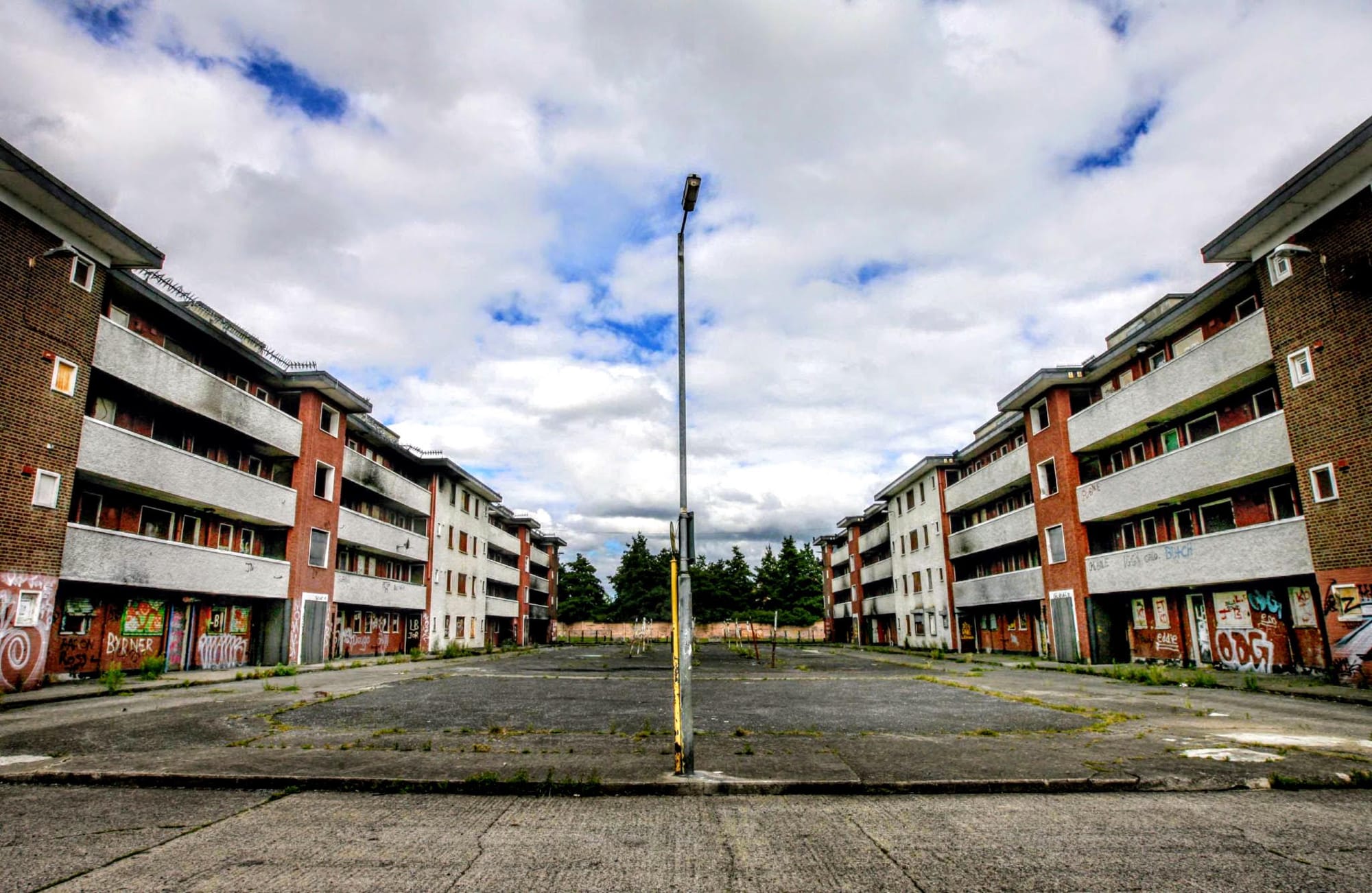
O'Devaney and the surrounding areas, like many parts of Dublin, have undergone rapid redevelopment. What will replace these areas are cleaner and more marketable locations, which has meant that it is far less accessible to the people who once called it home. The construction of the new apartments will continue, but the price to rent or buy in the area is often no longer feasible for the people who have lived in the area for generations.
"They love the look of it - the tracksuits, the rough pubs, the slang, the stories," Mick continues. "But they don't want the people. They want the perceived authentic working-class culture without the conditions that created it."
This tension sits at the heart of Dublin's current identity. Middle-class people are not wrong to search for authenticity within the city they grew up in and belong, or even a bit of edge that is slowly being eroded from these areas. But when that search manifests as performance - shifting accents, curated roughness, selective authenticity - it can ring empty and distasteful, particularly to those being priced out of their areas, as well as the very culture being imitated.
That is not to say this is malicious - there must be some empathy granted to the
disillusioned middle-class youth who have been starved of the ability to form their own adult identity. It is, in many ways, a reaction to an outdated social contract. When the promised path forward collapses, people will often look elsewhere for grounding and meaning. What you wear, where you drink, how you speak: these become substitutes for more tangible and rooted forms of identity.
For Mick, the issue is not imitation itself, it is displacement: "It's not about who drinks where," he says. "It's about who gets to stay after the pub closes. People I grew up with are unfortunately scattered across the city and the world now. You can't build a life around your family and mates when you are being priced away from them and the area you grew up - it's unrecognisable now in many ways because the people look like they are from here, but they aren’t if you get me...?"
Cosplaying as working-class is not a crime. But it is socially profitable for those who feel stuck and feel like the life they were sold has passed its sell-by date. But it does point to something deeper: a generation searching for meaning in a system and state that offers them very little stability and prospects. The danger is when that search colonises the reality of those whose identities are not optional. For those who have grown up in Dublin 7 and the Liberties, "working-class" is not an aesthetic, but a lived condition shaped by community, constraint, and struggle. The community feel that was once a staple of these areas is no longer as prominent. As American and middle-class multinational workers move into 'rough areas', people like Mick and his mates are often forced elsewhere.
As James Joyce once wrote, "Think you're escaping and run into yourself. Longest way round is the shortest way home". No amount of borrowed identity can fully resolve that tension and the feeling of helplessness felt by many.
Joyce also said, "Good puzzle would be cross Dublin without passing a pub", a modern take on this would be to ask someone to cross Dublin without spending a hundred quid, passing an eviction, or a new aparthotel. The Irish government prides itself on the GDP of the country, but the lived reality does not align for many from both middle- and working-class backgrounds.
The multinational money that pumps the Irish economy is akin to a bodybuilder taking steroids - it enables a hollow masquerade. This money is not going to the people on the ground, rather it's driving people out of the areas they come from. It is further inadvertently blocking young people from moving onto the next stage of their lives because of the influx wealthy Americans and international investors into Ireland as a result.
And as long as young people remain locked out of the next stage of life - economically rooted yet culturally shifting - this cycle will continue. The pints of G and Ken' will flow, the same songs will play on the radios (Killeagh on repeat in most cases), and the same faux working-class identities will be performed by disenfranchised middle-class twenty- and thirty-somethings.
But for some, like Mick, this performance and adaptation of the motions tied to
working-class culture comes at a cost. "They're buying a version of Dublin that we're being pushed out of," he states. "It looks good on the outside. But it's not ours anymore. The commercialisation of working-class areas and aesthetics is profitable for many in a city and state that is starved of authenticity and opportunity.”
Brandon McGrane is a writer from Dublin. At present, he is working on a research paper with Maynooth University regarding the targeting of working-class communities by far right electoral candidates through social media.