'Who Is Allowed To Tell Their Story?': In Conversation with Maxine Peake

Interviewer: Tommy Sissons
There are few working-class characters on British television and in film, and even fewer played by actors from working-class backgrounds. Maxine Peake’s ability to channel her own class experience into characters who occupy a familiar (and often central) role in working-class communities, and the way that she does this with compassion, good humour and an eye for authenticity and skilful nuance, are just some of the qualities that make her such an important presence on screen and stage.
Peake is a key figure in representing working-class voices in an industry that has become increasingly exclusive - last year, Equity reported that only 8% of UK film and TV professionals come from working-class backgrounds (the lowest in a decade), while 60% are from middle- and upper-class origins.
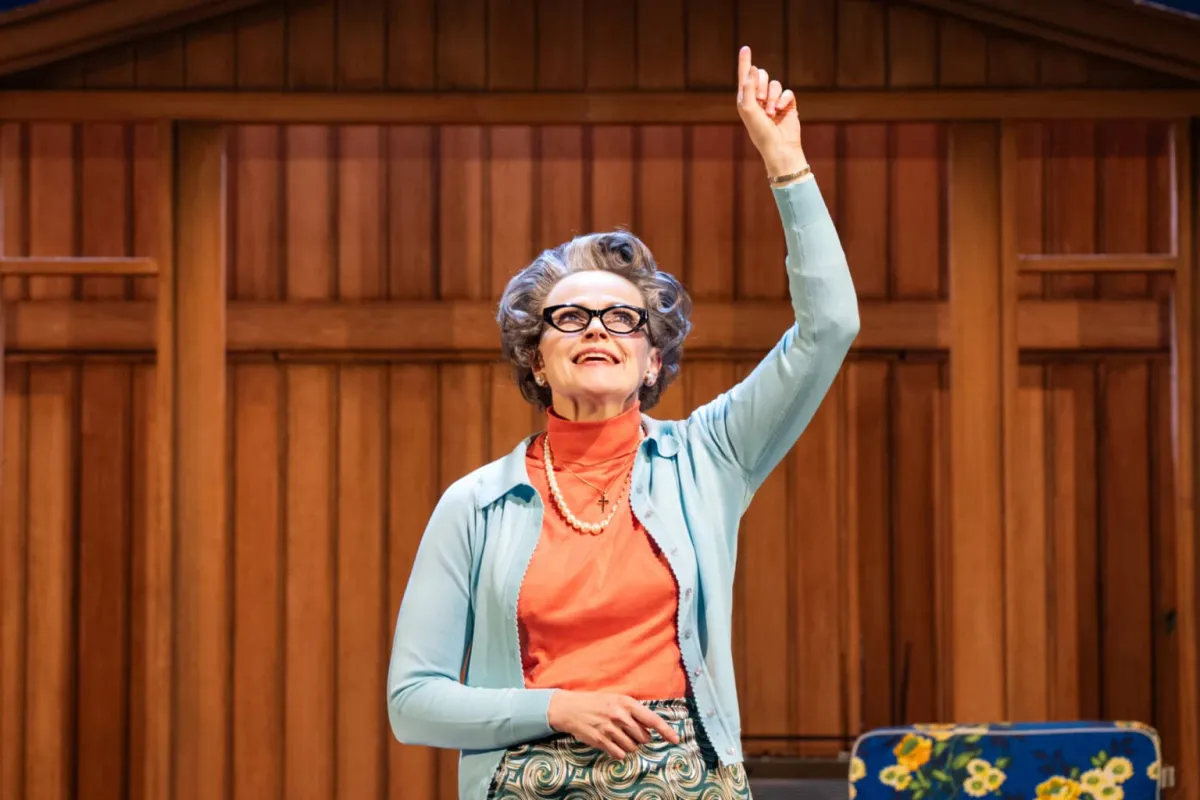
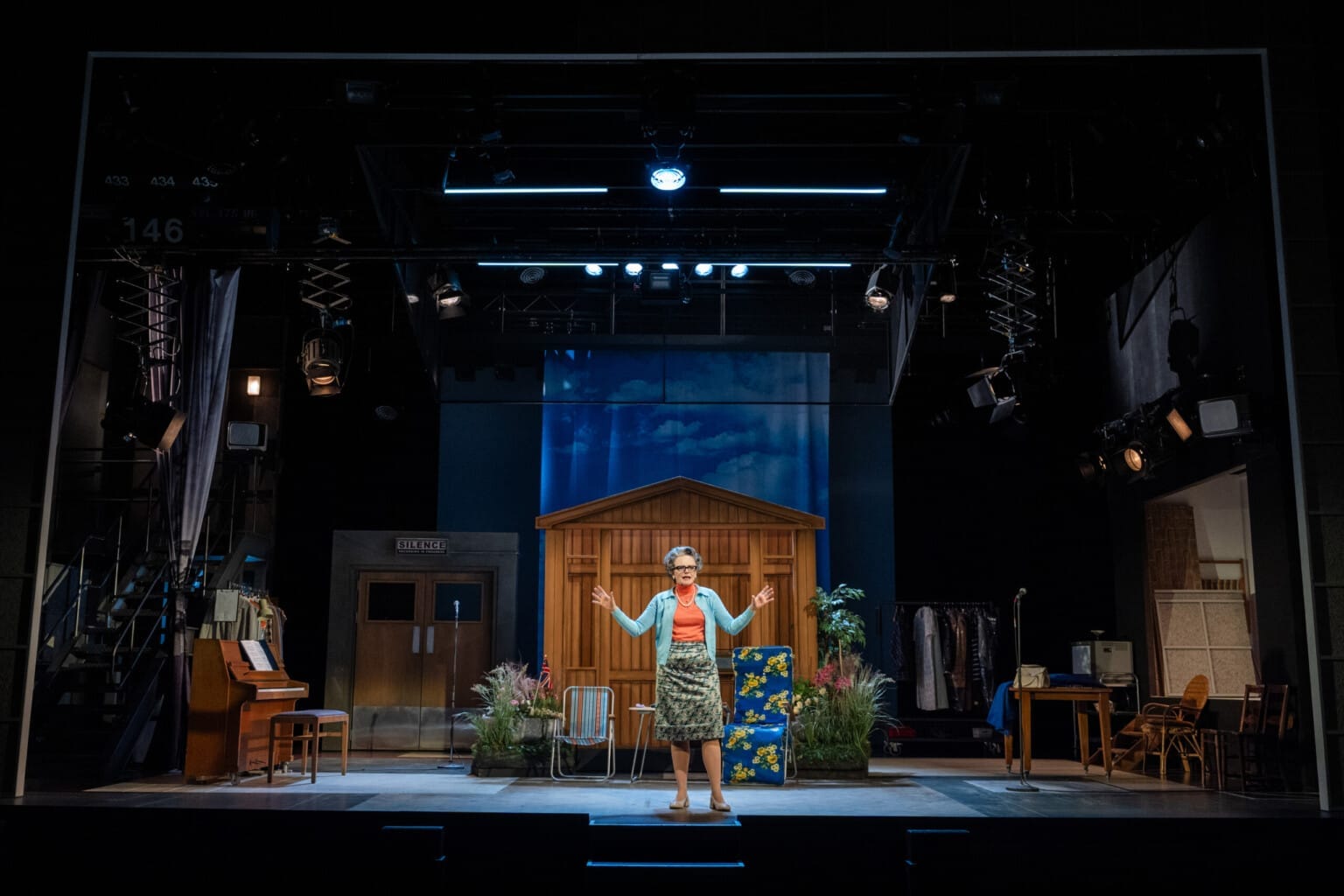
Recently, Peake appeared at Nottingham Playhouse as the titular role in The Last Stand of Mrs Mary Whitehouse, a play about the controversies of the British reactionary campaigner. I spoke with her during the final week of rehearsals to discuss her approach to the role and her wider work.
T: As vice-president of the Marx Memorial Library and a trustee of The Working Class Movement Library, you’re helping to preserve radical histories that are often left out of mainstream culture. Do you think the arts (whether stage, screen, or literature) have a similar duty to history?
M: I absolutely do. The issue faced today in getting these stories commissioned whether it be in film, TV or stage is their commercial viability. It would appear now the first thought in the commissioning process is: will this make a profit, can this have a life worldwide and that can be an unscalable hurdle for so many. You can see this reflected especially in screen output.
For me, being able to be part of a storytelling process that can expose an audience to a little or unknown radical history is what excites me the most. Lifting a lid on story that can illuminate the now.
I feel strongly that the working-class people need to know their history of revolt and revolution. The giant steps that have been made through centuries of sacrifice and conflict with the ruling classes. Maybe if we were more aware we wouldn’t be jumping into bed with the far right so easily.
T: Your next role is the titular character in Caroline Bird’s new play, The Last Stand of Mrs. Mary Whitehouse. Whitehouse is remembered by many as a reactionary figure aligned with censorious Thatcher-era conservatism. What drew you to her as a character, and why is this play important in today’s political and social climate?
M: I was drawn to the Mary Whitehouse project as I always am when I encounter a character and struggle to understand their motives. For me Caroline Bird’s play shone a light on a woman who was full of contradictions. It aligned thematically with many of the divisive characters that hog the mainstream press today. Those with the most problematic views seem to have the loudest voices.
It was also a piece about understanding. How screaming the loudest and drowning out opposing voices serves no one. That we need to listen and understand, only then can we come up with solutions that unite us and also can topple the stranglehold of those intent on dividing us.
T: The play is a two-hander, with Samuel Barnett taking on all supporting characters from Thatcher to Jesus. What does having one actor play so many roles, in contrast to the unchanging figure of Whitehouse, reveal about her and the society she tried to control?
M: Within Caroline’s framework, firstly in many of the characters there are comparisons and echoes of people Mary has encountered throughout her life. It’s about how these encounters trigger memories and at times pierce her consciousnesses.
T: You’ve been outspoken about class and representation in the arts. Do you feel the industry has become more or less open to working-class voices since you began your career?
M: No, sadly I wouldn’t say it’s become more open. As ever, there are always those who break through, who challenge the status quo, but if we are speaking about representation and authenticity within that representation, then the issue still stands - who is allowed to tell their story? Through what lens is that story allowed to appear?
Too many ‘Working-Class’ stories are still filtered through a white middle-class gaze. There needs to be more representation in the commissioning process. People in positions of power - be it producers, directors and commissioning editors, who have backgrounds that represent the fully authentic and diverse British experience.
T: In recent decades, class has been increasingly side-lined in political and cultural discourse, and some argue it can no longer be divided along the neat lines it once was (for instance, sociologists like Mike Savage claim there is now seven distinct social classes). In this context, how do young working-class practitioners make theatre that follows in the radical British traditions of Joan Littlewood’s Theatre Workshop, the Workers’ Theatre Movement, and 7:84? What role can working-class theatre like this play today, in a society where so much disagreement exists over what ‘class’ even means?
M: It’s basically impossible to follow in the footsteps of pioneers like Joan. That’s not to say it isn’t being achieved but the odds are stacked.
In my lifetime I have seen class and its structure change immensely. What it means to be working-class - the economic and social status – has changed dramatically. I hear people now from families where the two parents work in the education system, i.e. teachers, defining themselves as working class. When I was a child that wasn’t the case. If you were educated rightly or wrongly you were seen as middle-class. I still see myself as working-class - it’s cultural for me rather than financial.
It all boils down to privilege and that isn’t just about having a private income or parents who can support you financially - it’s also about a mindset. It’s about being exposed to arts and culture from an early age, it’s about going through an education system that tells you ‘You can and you will’ rather than my experience of ‘You can’t and you won’t’. It’s about navigating a path through the world where you have been given the coordinates, not left by the roadside trying to work it out with no map or compass.
The early to late 90’s was the first time I realised people were falling through the net and the term being used was ‘the underclass’, people who were deemed lower than working-class. This was horrifying.
I know I have privilege in the fact that I am white. I fully accept and understand that. This too, as with feminism - the problems lie depending on your heritage and culture. Being working-class is a many-layered experience depending on these factors. These factors need to be taken into account. So, there is no one-size-fits-all solution.
Going back to your question, to make truly radically working-class based and inspired theatre, young practitioners need investment. The arts are so criminally underfunded, and grants are few and far between, many with impenetrable application processes. We need government-backed schemes that are easy to access and with limited stipulations. More and more people want a return for their investments, and with another government that seems disinterested at least with the arts sector, it’s down to private backers to set out grants and funds.
We are a divided country, or at least that’s what the right-wing press would lead us to believe, so for me it’s about creating stories that nurture unity and understanding. That bring exposure of those different factions of the working-class experience. That we have more in common than divides us. It’s always about empowerment and education and solidarity.

T: You’ve written plays such as Beryl, Queens of the Coal Age, and The Last Testament of Lillian Bilocca, which focus on the lives of working-class figures in recent cultural memory. Since such legacies are often neglected, how central are the acts of excavation, archiving, and testimony to your writing practice?
M: Extremely central and essential for me - it is as much about my self-immersion in these lives as trying to gently educate and inspire others
T: Has your relationship to acting changed over time? Do you look for different things in a role now compared to early in your career?
M: Absolutely. As you mature, the realisation comes that acting may not be enough to be creatively fulfilling. That healthy collaboration is the most beautiful thing and when you find your creative connections and people who inspire you, hold onto those tight. Making my own work has saved me. The ability to navigate the business side and the bullshit is as important as any talent you believe you have.
T: If you could recommend one text (from the Marx Memorial Library or elsewhere) that you think speaks to our cultural moment, what would it be and why?
M: Engels’ The Condition of the Working Class in England. It’s shines a light on now.
Tommy Sissons is Editor-in-Chief of GRASS Magazine. His novel 'Cautious, A Boat Adrift' and polemic 'A Small Man's England' are both published by Repeater Books. His poetry collection is forthcoming with Broken Sleep Books.